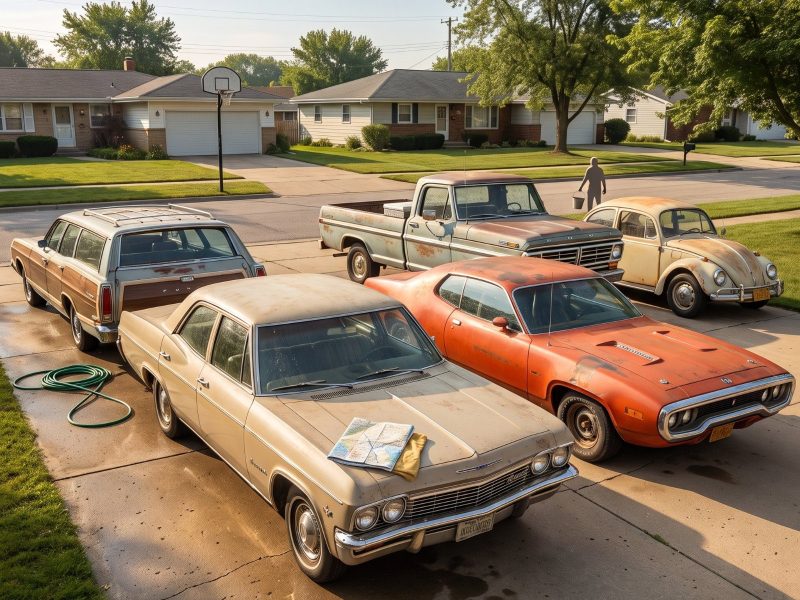

Some classic cars are forgotten. Others are simply waiting for someone to believe in them again.
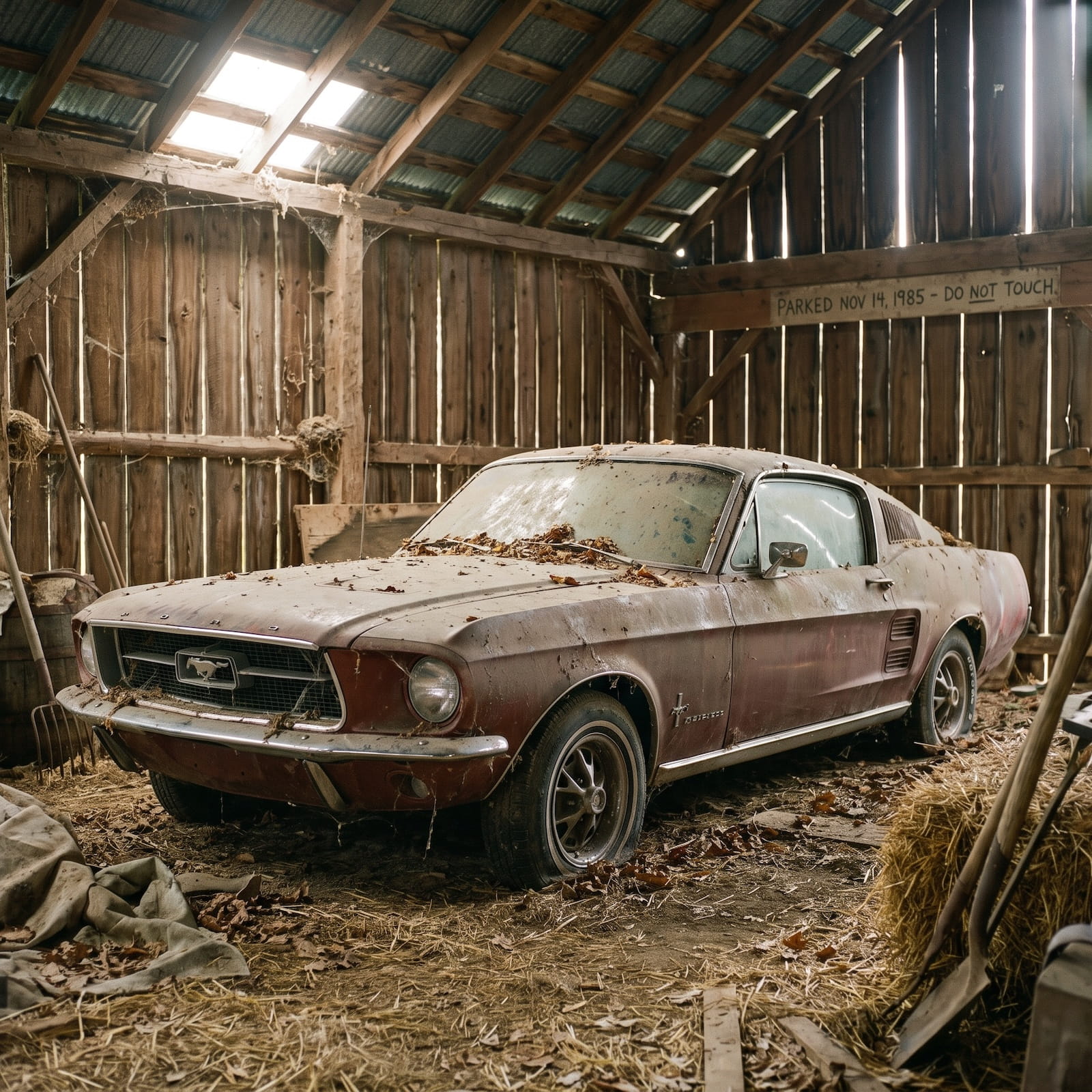
Imagine a 1967 Ford Mustang sitting beneath a dusty tarp inside an old barn for 38 years. Its tyres have gone flat, the paint has faded, and the engine hasn’t turned over in decades. To most people, it might look like an expensive collection of problems.
To a classic-car enthusiast, however, that same Mustang represents something remarkable: the opportunity to bring a piece of automotive history back to life.
The 1967 Mustang remains one of Ford’s most recognisable designs, with its long bonnet, muscular proportions, and unmistakable character. But bringing a neglected example back to roadworthy condition takes much more than fresh paint and polished chrome.
In this illustrated, fictional restoration journey, we’ll follow 28 dramatic before-and-after stages—from the first barn discovery to the final test drive.
Editor’s note: This is an original, imagined restoration story, not a documented account of a specific Mustang or 28 verified real-world rebuilds. The illustrations are visual references rather than evidence of a completed restoration.
28 Before & After Restoration Stages
1. The Barn Discovery That Started It All
Imagine opening the doors of an old wooden barn and finding a familiar silhouette beneath a thick, dusty tarp. The long bonnet, distinctive roofline, and classic proportions reveal something special: a 1967 Ford Mustang that hasn’t seen the road in 38 years. The tyres are flat, the chrome is dull, and the interior smells of decades-old upholstery. Yet beneath the dirt is a car worth saving.
Before & after: The first look reminds us that abandoned classics can hold extraordinary potential.

2. Pulling Back the Tarp
The covering has protected some surfaces from direct sunlight, but dust and moisture have still found their way underneath. As the tarp comes away, faded paint, rusty trim, and decades of grime become visible. The Mustang’s once-proud body finally sees daylight again.
Before & after: The reveal is exciting, but it also marks the beginning of a long and careful inspection.
3. The First Wash in Nearly Four Decades
A gentle rinse and careful hand wash remove the loose dirt. Harsh scrubbing is avoided because fragile paint and rust particles can scratch the remaining finish. Even before any major restoration begins, the shape of the Mustang starts to come back to life.
Before & after: A simple wash can make the difference between an abandoned relic and a recognisable classic.

4. The Flat Tyres and Frozen Wheels
After years without movement, the tyres are no longer safe for road use. Wheel bearings, brakes, and suspension components also need inspection. Before moving the vehicle, the team checks that the wheels can turn freely and that the structure can support safe transport.
Before & after: A fresh set of tyres changes the stance, but roadworthiness requires far more work.
5. The Rust Beneath the Floor
Surface rust is expected, but the real concern lies underneath. Floor pans, rocker panels, frame rails, and suspension mounting points are checked for serious corrosion. Some areas may need patching; others may require properly fitted replacement metal.
Before & after: This is where a cosmetic project can become a full structural restoration.
6. The Original Engine Bay
Opening the bonnet reveals an engine compartment filled with dust, old hoses, brittle wiring, and decades of neglect. Before attempting a start, the restorer identifies the engine, checks for internal damage, and examines the fuel, cooling, and lubrication systems.
Before & after: The goal isn’t simply to hear the engine run. It’s to make sure it can run safely.

7. Removing the Old Engine
If the engine requires a full rebuild, it is carefully disconnected, lifted out, and mounted on an engine stand. Every component is photographed and labelled to simplify reassembly. The empty engine bay also gives better access for rust repairs and refinishing.
Before & after: A bare engine bay may look like a setback, but it opens the door to a proper mechanical restoration.
8. The Engine Teardown
The cylinder heads, pistons, crankshaft, bearings, and other internal parts are inspected. Measurements determine what can be reused and what must be machined or replaced. An original engine can often be preserved, but its condition—not nostalgia—must guide the work.
Before & after: Hidden wear finally becomes visible when the engine is stripped to its essential parts.
9. Rebuilding the Mustang’s Heart
After machining and inspection, the engine is assembled with suitable bearings, seals, gaskets, and other replacement components. Clearances and torque settings follow the correct specifications for the particular engine. Fresh paint and cleaned accessories complete the transformation.
Before & after: What once looked like a forgotten lump of metal now resembles the powerful heart of a classic Mustang.

10. The Transmission Transformation
The gearbox is examined for worn gears, bearings, seals, and shifting components. Whether the car has an automatic or manual transmission, the objective is smooth, dependable operation. The driveshaft and rear axle receive attention as well.
Before & after: A rebuilt engine means little if its power cannot reach the road reliably.
11. The Suspension Comes Back to Life
Old bushings, shocks, springs, and joints can become unsafe after prolonged storage. The suspension is disassembled, cleaned, inspected, and rebuilt with appropriate components. Steering linkages are checked for wear, and the car will need a proper alignment.
Before & after: The finished Mustang should feel controlled and predictable rather than merely look impressive.
12. The Brake System Gets a Second Chance
Decades-old brake fluid, rubber hoses, wheel cylinders, calipers, and master-cylinder seals cannot be trusted without inspection. The braking system is rebuilt or replaced as needed, then tested carefully before road use.
Before & after: The most important upgrade in any restoration is the ability to stop safely.
13. Stripping Away the Old Paint
Before choosing a new finish, the restorer evaluates how much original paint can be saved. For a full repaint, damaged coatings are removed using methods suited to the underlying metal. Rust repairs and panel work come before primer.
Before & after: The Mustang temporarily loses its colour, revealing the bodywork beneath.
14. Repairing the Body Panels
Dented wings, corroded lower sections, and misaligned panels are repaired or replaced. Proper welding, corrosion protection, and panel alignment require patience. The doors, bonnet, and boot lid are fitted repeatedly to achieve consistent gaps.
Before & after: Beautiful paint begins with straight, properly repaired metal.

15. The Primer Stage
With the metalwork complete, suitable primers and surface preparation materials protect the body and create a foundation for paint. Sanding and blocking reveal imperfections that would otherwise show through the final finish.
Before & after: For the first time, the project starts to resemble a finished car rather than a collection of repairs.
16. Choosing the Perfect Mustang Colour
Should the Mustang return to its factory colour or receive a completely different finish? Some owners favour authenticity, while others choose a shade that reflects their personal taste. Checking the original data plate and build information can help establish the factory specification.
Before & after: The colour decision shapes the personality of the entire rebuild.
17. The Fresh Paint Reveal
After careful preparation, the body receives its chosen paint system and finish. Proper curing, inspection, and polishing create depth and gloss. The transformation from dusty barn find to gleaming classic is one of the most dramatic moments in the process.
Before & after: Fresh paint brings back the curves that made the 1967 Mustang unforgettable.

18. Restoring the Chrome and Trim
Bumpers, emblems, window surrounds, and decorative trim are cleaned, repaired, replated, or replaced where necessary. Small details make a surprising difference to the overall appearance. Correctly fitted trim also helps protect surrounding surfaces.
Before & after: The chrome provides the finishing contrast that gives the Mustang its period character.
19. The Interior Before Restoration
Inside, the seats may be torn, the carpet brittle, and the dashboard faded. Rodents, moisture, and dust can create additional problems. The cabin is carefully dismantled, and salvageable original components are separated from those beyond repair.
Before & after: The interior tells the story of the car’s long sleep more clearly than almost any other part.

20. Rebuilding the Seats
Seat frames and tracks are inspected, repaired, and refinished. New foam and upholstery restore comfort while preserving the correct shape. Owners seeking a factory-style finish can select materials and patterns appropriate to their Mustang’s configuration.
Before & after: A beautifully restored seat can make the cabin feel decades younger.
21. A New Dashboard and Instrument Cluster
The instruments are tested and repaired, while switches, wiring, lighting, and controls receive attention. The steering wheel, dashboard pad, and trim are restored where possible. Safety-related electrical faults must be corrected before the car returns to the road.
Before & after: The driver’s view transforms from a dusty time capsule into a welcoming classic cockpit.

22. Replacing the Carpet and Headliner
Fresh carpet, sound insulation, and a properly fitted headliner dramatically improve the cabin. Before installation, the restorer makes sure water leaks and underlying rust have been resolved. Otherwise, the same damage could return.
Before & after: The inside of the Mustang finally begins to feel complete.
23. The Wheels and Tyres Reveal
Period-correct wheels can preserve the original appearance, while carefully selected aftermarket designs create a more customised look. Whatever the choice, wheel dimensions, tyre load ratings, and clearances must be suitable for the vehicle.
Before & after: The right wheels give the restored Mustang its unmistakable road-ready stance.
24. Reassembling the Front End
Headlights, grille, bumper, indicators, and front trim are carefully installed. Wiring is checked, fasteners are secured, and panel alignment is confirmed. The famous Mustang face gradually returns.
Before & after: This is the moment when the restored shell starts looking like a real car again.
25. The First Engine Start
With fuel, lubrication, cooling, electrical, and ignition systems checked, the rebuilt engine is prepared for its first start. The process follows the engine builder’s recommendations, including any required break-in procedures. Oil pressure, temperature, leaks, and unusual noises are closely monitored.
Before & after: Hearing the engine come to life is the emotional reward for countless hours of work.
26. The First Careful Test Drive
Before leaving the workshop, the car undergoes static checks and appropriate low-speed testing. Brakes, steering, suspension, transmission, cooling, and electrical systems must all behave correctly. A professional inspection and any legally required roadworthiness checks come before regular driving.
Before & after: The Mustang’s first journey should be about confirming safety, not showing off speed.
27. The Before-and-After Photo Reveal
Place the original barn photographs beside the finished car. The comparison is extraordinary: flat tyres become polished wheels, rusted panels become smooth bodywork, and a dusty cabin becomes an inviting interior. The same familiar Mustang silhouette connects both versions.
Before & after: The most impressive difference isn’t just how the car looks. It’s how much careful work went into saving it.

28. The Finished 1967 Mustang Returns to the Road
Imagine the completed Mustang parked outside the very barn where it was discovered. The paint gleams in the afternoon sun, the engine runs smoothly, and the interior looks ready for another generation of memories. After 38 years of silence, the car has a new chapter ahead.
Before & after: A successful restoration doesn’t erase the past. It gives the past a future.

Why Restoring a 1967 Mustang Is About More Than Money
A classic Mustang restoration can demand significant time, specialised skills, and financial investment. Depending on the car’s condition, hidden corrosion and mechanical damage can change the project’s scope dramatically.
Yet enthusiasts often pursue these projects for reasons that have little to do with resale value.
They want to preserve a design that helped define an era. They want to learn traditional mechanical skills. They want to hear an old engine run again, or perhaps pass a special car down to their children.
Every repaired panel and restored component becomes part of the vehicle’s continuing history.
Final Thoughts: From Forgotten Barn Find to American Classic
The most beautiful part of a restoration isn’t always the final photograph.
It’s the journey between the two images.
The dusty car under a tarp represents years of silence and uncertainty. The finished Mustang represents determination, craftsmanship, and the belief that something old can still have an extraordinary future.
Whether you prefer a factory-correct restoration or a tasteful modernised rebuild, there’s something undeniably special about seeing a classic Mustang return to the road.
If you found a forgotten 1967 Mustang in an old barn, would you restore it to factory condition or turn it into your dream custom build?