Introduction: Two Volkswagens, One Unforgettable Day
On a quiet Saturday morning, two classic Volkswagens sat side by side in an old garage.
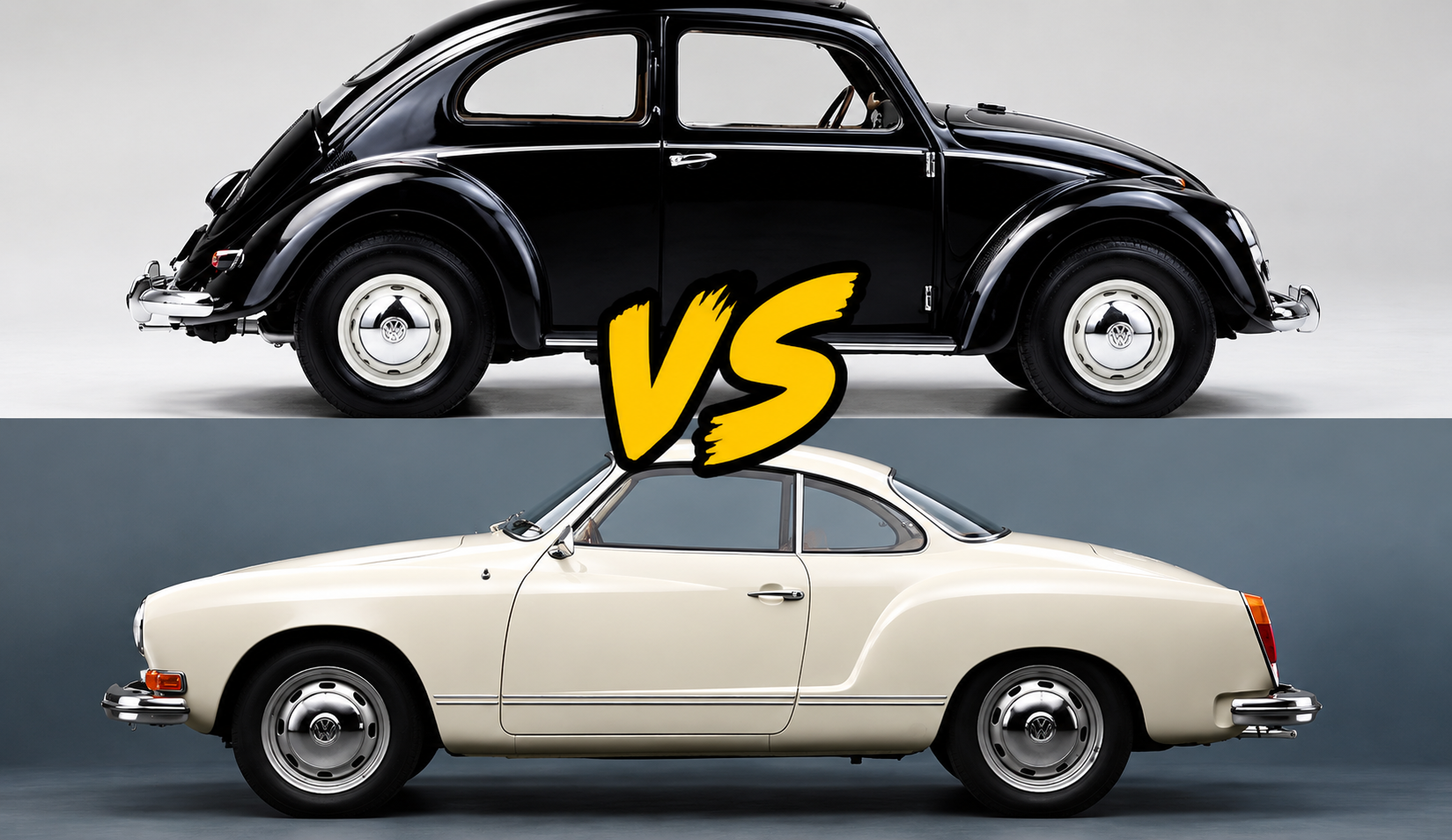
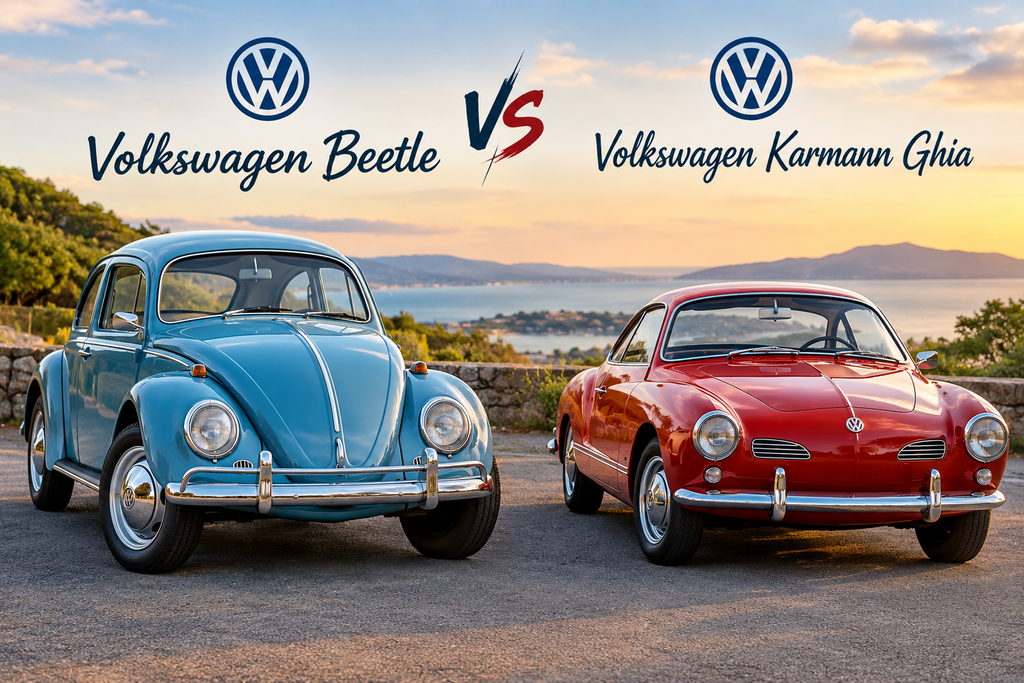
One was a familiar Volkswagen Beetle, its rounded body carrying decades of memories. The other was a beautifully shaped Volkswagen Karmann Ghia, with its low roofline, elegant curves, and unmistakable sporty appearance.
To an ordinary visitor, they were simply two old cars.
But to Daniel, a lifelong classic-car enthusiast, they represented something much more.
The Beetle reminded him of practicality, simplicity, and the idea that a car did not need to be complicated to become legendary. The Karmann Ghia represented something different—style, individuality, and the pleasure of owning a car that looked like it belonged on a movie set.
Daniel had recently inherited both cars from his grandfather.
There was only one problem.
His grandfather had left behind a handwritten note:
“One was built for the journey. The other was built for the feeling. Drive them both before you decide.”
Daniel wondered what his grandfather meant.
That weekend, he decided to find out.
The Mystery Behind the Two Classics
Daniel started with the Beetle.
Its rounded headlights and familiar curved body immediately made him smile. The car looked simple compared with modern vehicles, but that simplicity was part of its charm.
The Beetle had become famous around the world for its distinctive shape, practical character, and straightforward mechanical design.
Daniel turned the key.
The engine came to life with its unmistakable air-cooled sound.
There was nothing dramatic about the moment.
And somehow, that was exactly what made it special.
The Beetle: Simplicity With Character
The Volkswagen Beetle was designed around an uncomplicated philosophy.
Its compact dimensions, rear-mounted air-cooled engine, and relatively simple mechanical layout helped give it a reputation for being approachable and practical.
As Daniel drove through the countryside, he noticed something surprising.
The Beetle did not try to impress him.
It simply moved along the road.
Every turn felt relaxed. Every vibration reminded him that this was an automobile from another era.
It was not about speed.
It was about character.

Then Came the Karmann Ghia
Later that afternoon, Daniel returned to the garage and looked at the Karmann Ghia.
The difference was immediately obvious.
Where the Beetle looked friendly and practical, the Karmann Ghia looked elegant.
Its sculpted bodywork seemed almost too beautiful to have been created from the same family of mechanical ideas.
Daniel opened the door.
The cabin was compact, but the entire experience felt different.
He started the engine and pulled onto the road.
Within minutes, he understood the second half of his grandfather’s message.
The Karmann Ghia: Style With a Sporty Spirit
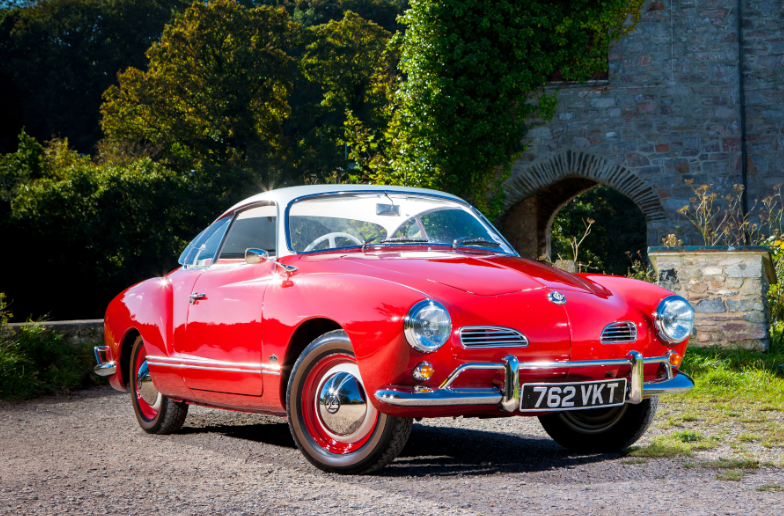
The Volkswagen Karmann Ghia was created as a more stylish alternative within the Volkswagen family.
Its body was designed by the Italian coachbuilding firm Carrozzeria Ghia, while German company Karmann handled production.
Underneath, it shared important mechanical elements with Volkswagen’s existing technology, but visually it was transformed into something far more dramatic.
Daniel drove along the same road he had taken earlier.
The scenery had not changed.
But the experience had.
The low-slung body, elegant curves, and sporty appearance made the drive feel like an occasion.
The Karmann Ghia was not simply transportation.
It was a statement.
Beetle vs. Karmann Ghia: Two Different Personalities
That evening, Daniel placed both cars outside the garage.
He began comparing them.
Not as machines.
As personalities.
Design
The Beetle’s rounded shape is one of the most recognizable designs in automotive history. Its appearance is friendly, distinctive, and instantly recognizable.
The Karmann Ghia takes a completely different approach.
Its long, flowing curves and lower profile give it a more sophisticated appearance. It looks like a classic sports car, even though its mechanical roots are closely connected to the Beetle.
Beetle: Simple, iconic, practical.
Karmann Ghia: Elegant, stylish, sporty.
Driving Experience
The Beetle feels relaxed and honest.
It is the kind of classic that encourages you to slow down and enjoy the journey.
The Karmann Ghia offers a different emotional experience. Its styling and lower driving position make even an ordinary trip feel more special.
Neither car needs to be judged by modern performance standards.
Their appeal comes from the experience they provide.
History
The Beetle became one of the world’s most recognizable automobiles and remained in production in various forms for decades.
The Karmann Ghia had a different role. It was produced in smaller numbers and positioned as a stylish coupe and convertible based on Volkswagen mechanical foundations.
The two cars therefore share an important connection, but their identities developed in very different directions.
Maintenance
For classic-car owners, maintenance matters.
The Beetle’s relatively straightforward mechanical design has contributed to its popularity among enthusiasts. Parts availability and a large community of owners and specialists can also make ownership more approachable, although the condition of an individual car matters enormously.
The Karmann Ghia shares some mechanical DNA with Volkswagen models of its era, but its unique bodywork can make restoration more specialized.
Rust, body condition, previous repairs, engine condition, electrical components, and the availability of correct parts are all important considerations when evaluating either car.
A beautiful exterior does not necessarily mean a mechanically healthy classic.
The Collector’s Question
Daniel looked at the two cars again.
For years, he had assumed that eventually he would have to choose one.
But now he understood the mystery behind his grandfather’s note.
The Beetle and Karmann Ghia were never really competing for the same role.
The Beetle was about accessibility, simplicity, nostalgia, and timeless charm.
The Karmann Ghia was about elegance, individuality, and the joy of owning something visually distinctive.
One invited people to smile.
The other invited people to stop and look.
One felt like an old friend.
The other felt like an old dream.
The Final Drive
The following morning, Daniel took the Beetle out first.
He drove slowly through town, waving to an elderly man who recognized the car from across the street.
Later, he returned for the Karmann Ghia.
A group of young people stopped to photograph it.
Daniel finally understood what his grandfather had been trying to tell him.
Classic cars are not always about choosing which machine is better.
Sometimes they are about understanding what each machine represents.
The Beetle had taught him that simplicity could become timeless.
The Karmann Ghia had shown him that practicality could be transformed into beauty.
Daniel returned both cars to the garage.
He placed his grandfather’s note on the workbench and smiled.
He no longer planned to choose between them.
He planned to keep driving both.
Volkswagen Beetle vs. Karmann Ghia: Which Classic Fits Your Personality?
The answer depends on what you want from a classic Volkswagen.
Choose the Beetle if you love:
- Simple and recognizable styling
- Classic Volkswagen character
- Practicality and usability
- A huge enthusiast community
- The unmistakable Beetle experience
- Nostalgia and timeless charm
Consider the Karmann Ghia if you love:
- Elegant classic-car styling
- A lower, sportier appearance
- Rarer and more distinctive bodywork
- Classic coupes and convertibles
- Collectible Volkswagen history
- A car that attracts attention wherever it goes
Final Thoughts
The Volkswagen Beetle and Volkswagen Karmann Ghia may share important mechanical roots, but they tell very different stories.
The Beetle is the friendly classic—the simple car that became a global icon.
The Karmann Ghia is the stylish sibling—the Volkswagen that turned familiar mechanical foundations into something elegant and eye-catching.
For collectors, enthusiasts, and classic-car lovers, the real attraction may not be deciding which one wins.
It may be discovering which personality speaks to you.
Because sometimes the best classic car is not the one that performs the fastest.
It is the one that makes you want to take the long way home.