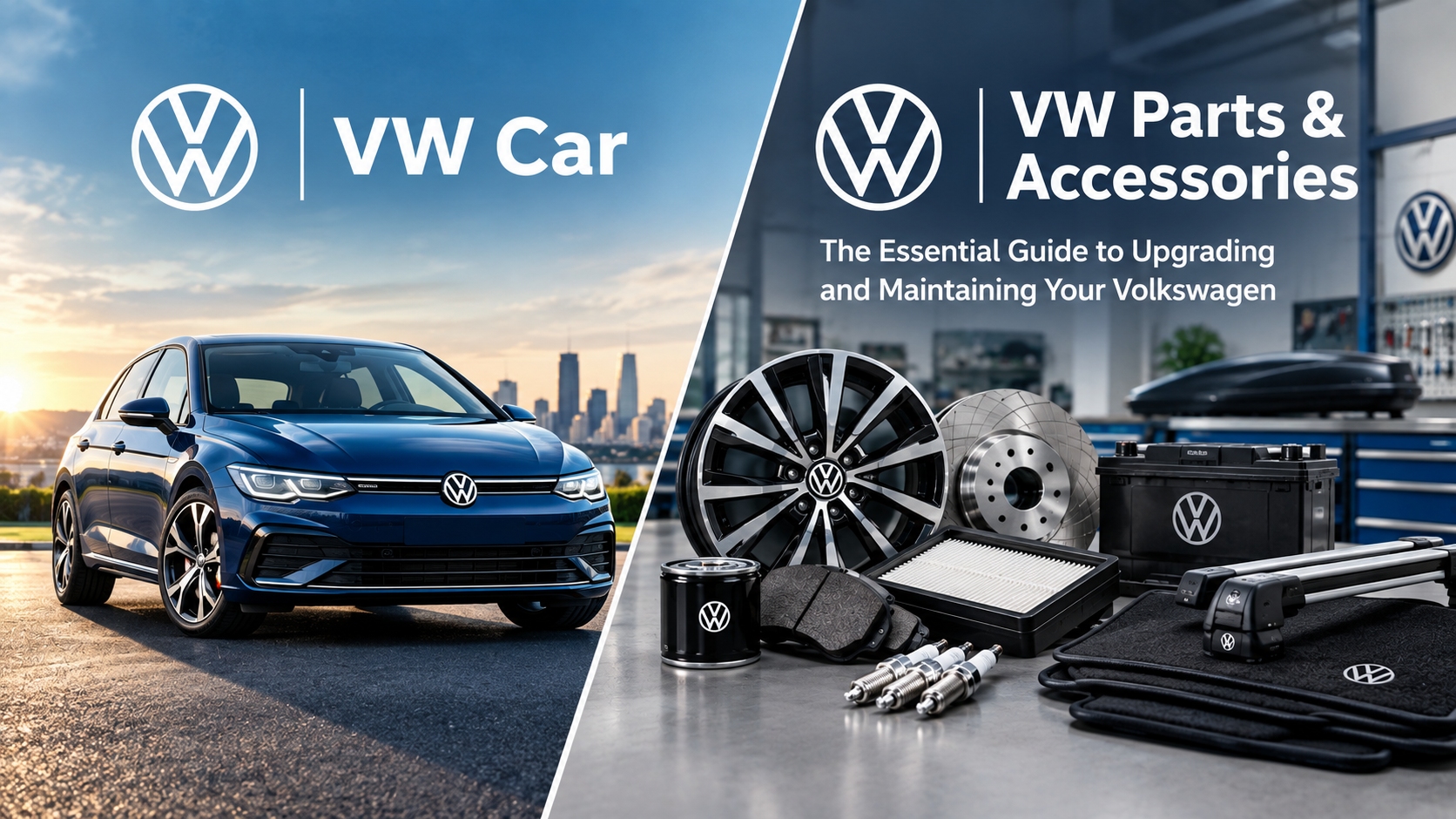
Owning a Volkswagen is about more than simply getting from one destination to another. Whether you drive a classic Beetle, Golf, Jetta, Passat, Tiguan, Polo, or another VW model, keeping the vehicle in good condition requires the right VW parts and accessories.
From routine replacement parts such as filters, brake components, and wiper blades to practical accessories, interior upgrades, and performance-focused modifications, the right equipment can help maintain your Volkswagen’s functionality while making it more comfortable and personal.
This guide explains the essential Volkswagen parts, VW accessories, maintenance components, and upgrade options worth considering—and how to approach each one carefully.
1. Understanding the Different Types of VW Parts
Before buying anything for your Volkswagen, it helps to understand the major categories of parts.
Genuine and OEM-Style Parts
Genuine Volkswagen parts are designed for specific Volkswagen vehicles and are identified by manufacturer part numbers. Volkswagen’s own accessory documentation also emphasizes using vehicle-specific fitting instructions for accessories and electrical components.
OEM-style and aftermarket parts can also be useful, but compatibility, quality, specifications, and installation requirements should always be checked.
Replacement Parts
These are components that eventually wear out through normal driving. Common examples include:
- Brake pads and discs
- Oil and air filters
- Cabin filters
- Spark plugs
- Wiper blades
- Batteries
- Belts and tensioners
- Suspension components
- Lamps and bulbs
- Engine and transmission components


5
2. Essential VW Maintenance Parts
Regular maintenance is one of the most important ways to keep a Volkswagen reliable. The exact service requirements depend on the model, engine, transmission, mileage, driving conditions, and local service schedule, so owners should consult the appropriate vehicle documentation rather than applying one universal interval.
Engine Oil and Oil Filters
Engine oil lubricates moving components and helps manage heat and friction inside the engine. The oil filter removes contaminants from the circulating oil.
When changing the oil, make sure the replacement oil meets the specification required for your particular VW engine.
Important: Don’t choose engine oil simply because the viscosity looks appropriate. Check the required Volkswagen oil specification for your exact engine.
Air Filters
The engine air filter helps prevent dust and debris from entering the engine’s intake system. A heavily restricted filter can affect airflow.
For vehicles driven in dusty environments, checking the air filter more frequently may be worthwhile.
Cabin Air Filters
The cabin filter helps clean the air entering the passenger compartment. Depending on the vehicle and filter type, it may help reduce dust, pollen, and other airborne particles.
Brake Components
Brake pads and discs are critical safety components. They should be inspected for wear and replaced when necessary.
Some VW parts catalogs and dealerships list brake pads, oil filters, wheels, and wiper blades among common Volkswagen replacement components.


4
3. Step-by-Step: A Basic VW Maintenance Check
A simple inspection can help you identify problems before they become more expensive repairs.
Step 1: Check the Engine Oil
Park the Volkswagen safely on level ground and allow the engine to cool according to the vehicle’s instructions. Check the oil level using the method specified for your model.
Look for:
- Correct oil level
- Unusual oil appearance
- Signs of leakage
- Oil around the engine compartment
Never add an oil type that does not meet your vehicle’s required specification.


5
Step 2: Inspect the Filters
Check the engine air filter and cabin filter according to the vehicle’s service requirements.
A dirty filter doesn’t automatically mean it needs replacement immediately, but excessive contamination, damage, or reaching the manufacturer’s replacement interval are reasons to consider replacing it.


6
Step 3: Check the Brakes
Look for obvious signs of brake wear and pay attention to changes in braking behavior.
Warning signs can include:
- Grinding sounds
- Squealing
- Steering vibration while braking
- A soft or unusual brake pedal
- Brake warning lights
- Reduced braking performance
Brake-system repairs should be handled by someone with the appropriate tools and expertise.


6
Step 4: Inspect Tires and Wheels
Check tire pressure using the specification for your vehicle and inspect the tires for:
- Uneven wear
- Cracks
- Bulges
- Low tread
- Foreign objects
Also inspect the wheels for visible damage.


6
Step 5: Check Lights and Wipers
Walk around the vehicle and verify that the exterior lights operate correctly. Inspect windshield wipers for cracking, splitting, or poor cleaning performance.
Small components such as wiper blades may seem insignificant, but they can make a major difference to visibility during bad weather.
4. VW Interior Accessories
Maintenance keeps your Volkswagen working properly, but accessories can make everyday driving more comfortable.
Popular interior accessories include:
Floor Mats
Rubber or carpet floor mats help protect the original flooring from dirt, water, mud, and everyday wear.
Cargo and Trunk Organizers
A cargo organizer can prevent shopping bags, tools, emergency equipment, and other items from moving around the luggage compartment.
Phone Holders
A properly fitted phone holder can make navigation more convenient while keeping the device positioned securely.
Seat and Interior Protection
Seat covers and protective accessories can help reduce wear, particularly in vehicles used frequently by families, commuters, or businesses.


6
5. VW Exterior Accessories
Exterior accessories can add practicality while changing the appearance of your Volkswagen.
Roof Racks and Carrier Bars
Roof carrier systems can be useful for transporting bicycles, luggage, sporting equipment, or other items.
Volkswagen publishes vehicle-specific fitting instructions for genuine accessories such as carrier bars, showing why compatibility matters when selecting roof equipment.
Mud Flaps
Mud flaps can help reduce the amount of dirt and road spray reaching the vehicle’s bodywork.
Door Protection
Door-edge guards and protective accessories can help reduce minor damage from everyday use.
Wheel Accessories
Depending on the model, owners may consider:
- Alloy wheels
- Wheel center caps
- Wheel locks
- Replacement wheel bolts
- Tire-pressure-related components


5
6. Performance Upgrades for Volkswagen Models
Once basic maintenance is under control, some owners want to improve the driving experience.
Performance upgrades can include:
High-Performance Tires
Tires have a major effect on handling, braking, comfort, and road grip. Choosing a quality tire appropriate for the vehicle is often more important than simply choosing the largest possible wheel.
Suspension Upgrades
Depending on the model, upgraded shocks, springs, or other suspension components can alter handling and ride characteristics.
However, suspension modifications should be selected as a complete system rather than buying individual components without considering compatibility.
Brake Upgrades
Performance-oriented brake components may be appropriate for certain driving applications. Brake upgrades need to match the vehicle and intended use.
Engine Air Intake Upgrades
Some enthusiasts install aftermarket intake components to change airflow characteristics or engine sound. Results vary significantly between vehicles, and an intake modification should not replace routine filter maintenance.
ECU Tuning
Software tuning can alter engine operating parameters. Because modern Volkswagen vehicles rely heavily on electronic systems, tuning should be approached carefully and performed by a reputable specialist familiar with the specific engine and ECU.
7. Don’t Forget Volkswagen Electronics
Modern Volkswagens contain extensive electronic systems, sensors, control modules, and wiring.
This makes compatibility particularly important when installing electrical accessories.
For example, Volkswagen’s own accessory installation instructions can require battery disconnection, wiring installation, coding, and functional testing for certain electrical accessories. The documentation also warns that battery disconnection can affect stored vehicle data.
This is why complicated electrical modifications are often better left to a qualified technician.
8. How to Choose the Correct VW Part
One of the biggest mistakes when purchasing replacement parts is assuming that every part will fit every Volkswagen.
Even vehicles with similar names can have different engines, transmissions, body styles, production years, and equipment levels.
Before purchasing, check:
Vehicle Model
For example:
- Golf
- Jetta
- Passat
- Polo
- Tiguan
- Touareg
- Beetle
Model Year
A part designed for one generation may not fit another.
Engine
Check the exact engine specification rather than relying only on the vehicle name.
VIN or Part Number
When available, the vehicle identification number and exact part number can help confirm compatibility.
Transmission
Automatic and manual versions can require different components.
Left-Hand or Right-Hand Configuration
Some body and interior parts differ depending on vehicle configuration and market.
Tip: If you are uncertain, confirm compatibility with a Volkswagen parts specialist before ordering.
9. OEM vs. Aftermarket VW Parts
Should you buy genuine Volkswagen parts or aftermarket components?
The answer depends on the particular component and your priorities.
| Factor | Genuine/OEM Parts | Aftermarket Parts |
|---|---|---|
| Vehicle-specific fit | Usually designed for specific applications | Depends on manufacturer |
| Availability | May vary by model | Often broad |
| Price | Can be higher | Wide price range |
| Specification | Designed around vehicle requirements | Depends on brand |
| Warranty | Depends on seller/manufacturer | Depends on manufacturer |
| Choice | More limited | Often extensive |
A cheap component isn’t necessarily a good bargain if it has poor fitment or requires early replacement.
For important components such as brakes, suspension, steering, and electrical systems, quality and compatibility should take priority over price alone.
10. Common Mistakes to Avoid When Buying VW Parts
Buying Without Checking Compatibility
A part that looks identical may have different dimensions, connectors, mounting points, or specifications.
Choosing Parts Only Because They Are Cheap
Price is only one factor. Consider quality, durability, warranty, manufacturer reputation, and compatibility.
Ignoring Installation Requirements
Some accessories are simple DIY projects. Others require specialist tools, electrical coding, calibration, or mechanical knowledge.
Modifying Safety Systems
Avoid making unqualified changes to airbags, braking systems, steering systems, or other safety-critical components.
Forgetting Maintenance After an Upgrade
An upgraded vehicle still needs regular oil, filter, brake, tire, coolant, and inspection work.
11. Building a Practical VW Maintenance and Upgrade Plan
Rather than purchasing random accessories, organize your Volkswagen improvements into three categories.
Priority 1: Safety
Start with:
- Brakes
- Tires
- Steering
- Suspension
- Lights
- Wipers
- Required warning repairs
Priority 2: Reliability
Then focus on:
- Engine oil
- Filters
- Spark plugs where applicable
- Belts and related components
- Coolant
- Battery
- Transmission servicing where required
Priority 3: Comfort and Personalization
Finally consider:
- Floor mats
- Cargo organizers
- Phone holders
- Roof racks
- Exterior styling
- Wheels
- Interior accessories
- Performance modifications
This approach helps prevent cosmetic upgrades from taking priority over important maintenance.
12. A Simple VW Parts Checklist
Keep this checklist handy when maintaining or upgrading your Volkswagen:
Maintenance
- ☐ Engine oil
- ☐ Oil filter
- ☐ Engine air filter
- ☐ Cabin filter
- ☐ Spark plugs, where applicable
- ☐ Brake pads
- ☐ Brake discs
- ☐ Wiper blades
- ☐ Battery
- ☐ Tires
- ☐ Coolant and other required fluids
Interior
- ☐ Floor mats
- ☐ Cargo organizer
- ☐ Phone holder
- ☐ Seat protection
- ☐ Interior storage accessories
Exterior
- ☐ Roof rack/carrier bars
- ☐ Mud flaps
- ☐ Wheel accessories
- ☐ Protective accessories
- ☐ Replacement exterior trim
Performance
- ☐ Tires
- ☐ Suspension components
- ☐ Brake upgrades
- ☐ Intake components
- ☐ ECU tuning
Final Thoughts
The best Volkswagen upgrade isn’t necessarily the most expensive part or the most dramatic modification. A well-maintained VW with the correct replacement parts can provide a better ownership experience than a heavily modified vehicle that has been neglected.
Start with maintenance and safety, choose parts according to your exact Volkswagen model and specifications, and then add accessories that genuinely improve the way you use your vehicle.
Whether you’re replacing an air filter, upgrading the wheels, installing a roof rack, refreshing the interior, or exploring performance modifications, the same principle applies: choose the right VW parts, install them correctly, and maintain the vehicle consistently.
That combination can help your Volkswagen remain practical, enjoyable, and ready for the road for years to come.