From military workhorses and amphibious cars to tiny city vehicles and forgotten utility machines, these unusual automobiles reveal how engineers once solved problems that modern technology, better roads, and changing lifestyles have largely left behind.

The history of the automobile is filled with extraordinary inventions. Some vehicles were built for speed, others for luxury, and many were designed to solve very specific problems.
Imagine living in a world where paved roads were uncommon, fuel was difficult to obtain, and crossing a river might require a specially designed vehicle. For decades, engineers worked tirelessly to create cars and trucks capable of overcoming these challenges.
Some inventions became legendary. Others disappeared almost as quickly as they arrived.
Today, modern highways, improved infrastructure, reliable engines, and specialized transportation services have made many of these unusual vehicles less necessary for everyday drivers.
But that doesn’t mean they weren’t brilliant.
In fact, some of the strangest automobiles ever manufactured were surprisingly clever solutions to the challenges of their time.
Here are 32 fascinating vehicles designed for problems most modern drivers rarely encounter anymore.
1. Willys MB Jeep – Built for a World Without Proper Roads

During World War II, military forces needed a lightweight vehicle capable of transporting soldiers and equipment across difficult terrain.
The Willys MB became one of the most recognizable military vehicles ever produced.
Its compact dimensions, four-wheel-drive system, and rugged construction allowed it to travel where ordinary passenger cars struggled.
Today, most motorists spend their time on paved roads, making this level of basic military off-road capability unnecessary for everyday transportation.
However, its influence lives on in modern SUVs and recreational off-road vehicles.
2. Volkswagen Type 181 – A Simple Car for Difficult Conditions
The Volkswagen Type 181, known as the Thing in the United States, was a simple utility vehicle developed with military and civilian applications in mind.
It featured removable doors, a folding windshield, and straightforward mechanical components.
Its design prioritized practicality and ease of maintenance rather than comfort.
Modern drivers generally expect air conditioning, advanced safety systems, and quiet cabins, making such a basic vehicle a niche choice today.
3. Amphicar Model 770 – The Car That Could Cross Water

The Amphicar Model 770 was one of the most unusual production vehicles of the 1960s.
It could operate on roads and navigate calm waterways using rear-mounted propellers.
The concept was intended to combine the convenience of a car with the capabilities of a small boat.
Although the Amphicar attracted considerable attention, its compromises in both road and water performance limited its popularity.
Today, bridges, ferries, and dedicated boats make amphibious passenger cars unnecessary for most motorists.
4. Citroën 2CV – Affordable Transport for Rural Families

The Citroën 2CV was created to provide inexpensive, practical transportation, particularly for people living in rural France.
Its soft suspension was designed to cope with rough roads, while its small engine helped keep running costs low.
The car became famous for its simplicity and distinctive appearance.
Modern economy cars offer far greater performance, comfort, and safety, but the 2CV remains a remarkable example of engineering around everyday needs.
5. Land Rover Series I – The Farmer’s All-Purpose Machine

Introduced in 1948, the Land Rover Series I was designed as a versatile utility vehicle suitable for farms, remote areas, and demanding working conditions.
Its rugged chassis and four-wheel-drive capability made it useful for agricultural work and difficult terrain.
For many owners, it served as both transportation and a working tool.
Modern tractors, agricultural equipment, and dedicated utility vehicles now handle many tasks once expected of a single Land Rover.
6. BMW Isetta – The Tiny Car Built for Crowded Cities

The BMW Isetta became famous for its unusual front-opening door and extremely compact body.
It offered economical transportation during a period when many European households could not afford conventional automobiles.
Its tiny engine and minimal dimensions made it suitable for short journeys.
Today, small hatchbacks, public transportation, and electric city vehicles provide more comfortable alternatives.
Yet the Isetta remains one of the most recognizable microcars ever built.
7. Messerschmitt KR200 – Transportation Inspired by Aircraft

The Messerschmitt KR200 was a three-wheeled microcar with a narrow body and distinctive aircraft-style canopy.
Passengers sat in tandem, helping keep the vehicle exceptionally slim.
It was designed to provide economical personal transportation in postwar Europe.
Its unusual layout made sense when affordability and low fuel consumption were major priorities.
Modern small cars deliver much better practicality without requiring such dramatic compromises.
8. Peel P50 – A Car Small Enough for Almost Anywhere

The Peel P50 is famous for being among the smallest production cars ever made.
Designed for extremely short urban journeys, it provided space for one person and a small amount of luggage.
Its tiny dimensions made parking remarkably easy.
However, its limited practicality meant it could never replace a conventional family car.
Modern scooters, bicycles, and compact electric vehicles offer alternatives for many short-distance journeys.
9. Fiat 500 Topolino – Making Car Ownership Affordable

The original Fiat 500, nicknamed Topolino, helped make automobile ownership more accessible in Italy.
Its compact body and small engine were designed to keep manufacturing and operating costs manageable.
For many families, it represented a major improvement over relying entirely on bicycles or public transportation.
Today’s affordable cars offer substantially more interior space, power, and safety.
But the Topolino demonstrated how thoughtful engineering could make mobility available to more people.
10. Austin Mini Moke – A Lightweight Vehicle for Warm Climates

The Mini Moke began as an attempt to create a lightweight utility vehicle using Mini mechanical components.
Although its military ambitions were limited, it found success as a recreational vehicle in warm climates.
Its open body, minimal doors, and simple construction made it enjoyable for beach resorts and short journeys.
Modern drivers generally prefer weather protection, crash protection, and everyday comfort.
The Moke survives mainly as a leisure-oriented concept rather than a mainstream transportation solution.
11. Volkswagen Type 2 Transporter – One Vehicle for Work and Family

The early Volkswagen Transporter offered an adaptable platform for businesses, families, and travelers.
It could serve as a delivery van, passenger vehicle, or camper.
This flexibility was especially useful when owning multiple specialized vehicles was expensive.
Modern vans and camper conversions continue the same tradition, but today’s buyers have far more purpose-built choices.
The original Transporter remains an icon of practical design.
12. Citroën Méhari – A Washable Vehicle for Outdoor Work

The Citroën Méhari featured lightweight plastic body panels and a simple open design.
It was well suited to recreational driving, agricultural tasks, and environments where an easy-to-clean vehicle was useful.
Its minimal construction reduced weight and helped make maintenance straightforward.
Modern utility vehicles offer better protection from weather and more advanced safety features.
Still, the Méhari’s uncomplicated approach remains appealing to enthusiasts.
13. Renault 4 – Practical Transportation for Rough Rural Roads

The Renault 4 combined compact dimensions with a practical rear hatch and suspension suitable for imperfect roads.
It was designed for families who needed one affordable vehicle to handle shopping, commuting, and rural travel.
Its versatility helped it become a popular everyday car.
Modern hatchbacks now provide the same general convenience with significantly improved technology and safety.
14. Volvo C303 – Built to Reach Remote Places

The Volvo C303 was developed as a highly capable utility vehicle for demanding conditions.
Its portal axles provided generous ground clearance, allowing it to navigate terrain that would challenge ordinary vehicles.
It was particularly useful for military and specialist applications.
Most modern drivers never encounter conditions requiring this level of off-road engineering.
For expedition enthusiasts, however, vehicles like the C303 remain fascinating.
15. Haflinger 700 AP – A Small Machine With Remarkable Capability

The Steyr-Puch Haflinger was a compact all-terrain vehicle designed for mountain environments and difficult working conditions.
Its lightweight construction, high ground clearance, and four-wheel-drive system made it surprisingly capable.
It could carry people and equipment into places inaccessible to ordinary cars.
Today, specialist all-terrain vehicles and modern utility machines fulfill many of these roles.
16. Unimog 404 – Transportation for Extreme Terrain

The Mercedes-Benz Unimog 404 was engineered for demanding terrain and utility applications.
Its high ground clearance and robust drivetrain made it useful in military and specialist environments.
Vehicles like the Unimog were designed for situations where road conditions could be unpredictable or nonexistent.
Modern Unimogs still serve specialized roles, but such extreme capability is unnecessary for ordinary commuting.
17. DKW Munga – The Compact Military Off-Roader

The DKW Munga was a compact four-wheel-drive vehicle developed for military and utility use in the 1950s.
Its lightweight construction and relatively simple mechanical design made it suitable for difficult terrain and remote operations.
Unlike modern SUVs designed primarily for comfort, the Munga emphasized durability and practicality.
Most drivers today rarely need to travel across undeveloped land, but this unusual vehicle shows how important basic off-road mobility once was.
18. GAZ-69 – Built for Remote Soviet Roads
The GAZ-69 was a rugged Soviet four-wheel-drive utility vehicle introduced in the early 1950s.
It was designed to operate in challenging conditions, including muddy tracks, snow, and remote rural areas.
Its straightforward construction made it useful where sophisticated repair facilities were unavailable.
Although modern vehicles offer far more comfort, the GAZ-69 represented an important solution to transportation challenges in regions with limited infrastructure.
19. Trabant 601 – Simple Transportation During Material Shortages

The Trabant 601 became one of the most recognizable cars of East Germany.
Its body used Duroplast panels, a composite material incorporating cotton fibers, while its small two-stroke engine provided basic transportation.
The Trabant reflected the manufacturing constraints and economic conditions of its era.
Today, modern vehicle manufacturing, emissions standards, and consumer expectations make its original design approach largely obsolete.
Nevertheless, it remains an important symbol of European automotive history.
20. Zündapp Janus – A Tiny Car With Doors at Both Ends
The Zündapp Janus was a German microcar introduced in 1957.
Its most unusual feature was its seating arrangement: passengers sat back-to-back, with access through doors at the front and rear.
The layout was intended to make efficient use of limited interior space.
Although clever, it offered compromises in practicality and safety compared with conventional cars.
The Janus demonstrates how manufacturers experimented with unconventional designs to make small vehicles more affordable.
21. Reliant Robin – Affordable Mobility With Three Wheels

The Reliant Robin was a lightweight British three-wheeled vehicle known for its unusual appearance.
Its design helped keep weight and running costs relatively low, and its legal classification offered licensing or taxation advantages to some owners.
For people seeking inexpensive personal transportation, it provided an alternative to conventional four-wheeled cars.
Today, efficient small cars offer better stability, safety, and everyday versatility.
The Robin remains a memorable part of British motoring culture.
22. Subaru 360 – Japan’s Small Car for a Growing Nation
The Subaru 360 was introduced in 1958 as an affordable vehicle for Japanese families.
Its compact dimensions and small engine helped it meet Japan’s kei-car regulations.
At a time when car ownership was still developing, vehicles like the Subaru 360 provided an accessible way for families to travel independently.
Modern kei cars continue to exist, but they now offer features and safety technology that early microcar designers could hardly have imagined.
23. Honda N360 – Big Practicality in a Small Package
The Honda N360 was a compact passenger car introduced in the late 1960s.
Its small dimensions made it well suited to crowded urban streets, while its efficient engine provided affordable transportation.
For buyers facing limited parking and expensive fuel, the N360 offered a practical solution.
Modern city cars continue to address similar problems, but with far better crash protection, refinement, and technology.
The N360 helped establish Honda’s reputation as a serious automobile manufacturer.
24. Suzuki Jimny LJ10 – A Tiny Off-Roader for Narrow Trails

The original Suzuki Jimny LJ10 was introduced in 1970.
Its small dimensions and four-wheel-drive capability made it useful for navigating narrow rural tracks and difficult terrain.
The vehicle combined the maneuverability of a compact car with genuine off-road engineering.
Modern Jimny models continue this philosophy, although most ordinary drivers can manage perfectly well with conventional passenger cars.
The original LJ10 remains an impressive example of compact utility design.
25. Volkswagen Schwimmwagen – A Military Car That Could Float
The Volkswagen Type 166 Schwimmwagen was developed during World War II.
It combined four-wheel-drive capability with an amphibious body and a propeller for traveling through water.
This allowed military personnel to cross certain waterways without depending entirely on bridges.
Its specialized engineering was valuable in particular wartime environments.
For modern civilian drivers, the complexity and compromises of an amphibious car generally outweigh the benefits.
26. Ford Model T – Transportation for an Era of Poor Roads

The Ford Model T helped transform personal transportation in the early twentieth century.
Its relatively simple mechanical construction, accessible pricing, and ability to cope with many rough roads made it useful in an era when automotive infrastructure was still developing.
Owners sometimes needed to perform repairs and adjustments themselves.
Today, reliable modern cars and widespread service networks have reduced the need for such mechanically simple everyday vehicles.
The Model T’s influence on mass automobile production remains enormous.
27. Citroën DS – A Luxury Car Designed to Handle Bad Roads
The Citroën DS was introduced in 1955 with advanced engineering, including its famous hydropneumatic suspension.
This system provided a smooth ride and helped the vehicle maintain its height under varying loads.
It was particularly impressive on uneven road surfaces.
Modern suspension technology offers sophisticated ride control without requiring the same historical design compromises.
The DS remains one of the most innovative and recognizable cars ever produced.
28. Tucker 48 – A Car Designed Around Emerging Safety Concerns
The Tucker 48 was an ambitious American automobile developed in the late 1940s.
It featured several forward-thinking design ideas, including a central headlight that turned with the steering on production examples.
Its engineering reflected growing interest in improving automobile safety and visibility.
Many safety concepts that were unusual in the 1940s are now addressed through modern lighting, structural engineering, seat belts, airbags, and electronic driver-assistance systems.
The Tucker remains a fascinating example of innovation ahead of its time.
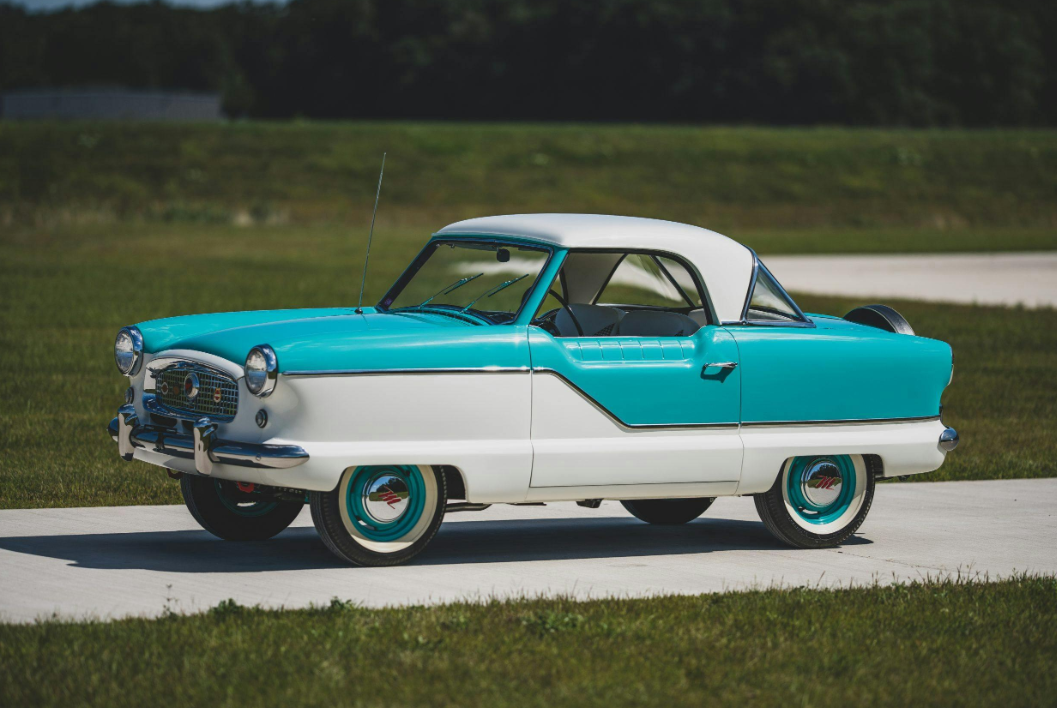
29. Nash Metropolitan – A Small Car for the American City

The Nash Metropolitan was introduced in the 1950s as a compact alternative to the large American cars of its era.
Its smaller dimensions made parking easier and reduced fuel consumption.
At a time when many American automobiles were becoming larger and heavier, the Metropolitan offered a different approach.
Today, buyers can choose from numerous compact hatchbacks, sedans, and electric vehicles.
The Metropolitan helped demonstrate that smaller cars could appeal to American motorists.
30. Chrysler Turbine Car – An Experiment in Alternative Engines
The Chrysler Turbine Car was an experimental automobile program from the 1960s.
Instead of a conventional piston engine, it used a gas turbine engine.
The technology promised smooth operation and the potential to run on different fuels.
However, issues involving efficiency, cost, and other engineering challenges prevented widespread production.
Modern automotive development has largely focused on improving piston engines, hybrid systems, and electric propulsion.
The Chrysler Turbine Car remains one of the most fascinating experimental vehicles in automotive history.
31. General Motors EV1 – An Electric Car Before Today’s EV Revolution

The General Motors EV1 was an early modern electric car made available through leasing programs in the 1990s.
Its aerodynamic body and electric drivetrain represented a serious attempt to explore battery-powered personal transportation.
At the time, battery technology, charging infrastructure, and manufacturing costs presented significant challenges.
Today, electric vehicles are produced by numerous manufacturers and supported by expanding charging networks.
The EV1’s historical significance lies in demonstrating possibilities that later became far more practical.
32. Rinspeed sQuba – The Car Designed to Travel Underwater

The Rinspeed sQuba concept was unveiled in 2008 as an extraordinary experiment in amphibious transportation.
Inspired by the idea of an underwater-capable sports car, it demonstrated a vehicle designed to operate on land and underwater.
The project was primarily a technological showcase rather than a practical solution for everyday transportation.
Most drivers have no reason to take their cars underwater, and the safety, engineering, and usability challenges make such a vehicle highly specialized.
Still, the sQuba proves that automotive engineers have never been afraid to explore unusual ideas.
Why Did These Unusual Vehicles Disappear?
Many of these vehicles were created during periods when transportation challenges were very different from those faced by modern motorists.
Several developments reduced the need for their original designs.
Better Roads and Transportation Infrastructure
Modern highways, bridges, tunnels, and improved rural roads have made transportation more predictable in many regions.
Vehicles no longer need extreme off-road capability simply to reach ordinary destinations.
Improved Automotive Technology
Modern engines, transmissions, suspension systems, and electronic controls offer far greater reliability and comfort.
Features that once required unusual mechanical solutions can now be achieved with more sophisticated engineering.
Changing Consumer Expectations
Drivers increasingly expect vehicles to provide safety, comfort, efficiency, and convenience.
Extremely basic cars, open utility vehicles, and unconventional microcars often struggle to meet these expectations.
More Specialized Transportation Options
Modern buyers can choose vehicles designed for specific purposes.
Farmers have agricultural machinery, rescue organizations have specialist vehicles, and recreational travelers have purpose-built campers and off-road equipment.
One unusual car no longer needs to perform every possible task.
Which of These 32 Vehicles Were the Most Innovative?
Several vehicles stand out because they introduced particularly creative solutions.
| Vehicle | Most distinctive innovation |
|---|---|
| Amphicar Model 770 | Combined road and water travel |
| Citroën 2CV | Economical transport suited to rough rural roads |
| BMW Isetta | Extremely compact packaging with a front-opening door |
| Citroën DS | Advanced hydropneumatic suspension |
| Volkswagen Schwimmwagen | Amphibious military mobility |
| Chrysler Turbine Car | Experimental gas turbine propulsion |
| General Motors EV1 | Early modern battery-electric transportation |
| Rinspeed sQuba | Experimental underwater-capable car |
Each vehicle represents a different approach to solving transportation problems.
Some concepts were commercially successful, while others remained experimental.
But all contributed to the wider history of automotive innovation.
Are Any of These Vehicles Still Useful Today?

Absolutely.
Although many of their original purposes are less relevant to everyday driving, several designs remain useful in specialized environments.
Rugged utility vehicles continue to serve farmers, remote communities, and emergency services.
Compact city cars remain valuable where parking is limited and streets are narrow.
Amphibious vehicles still have niche applications in rescue, recreation, and specialized operations.
The important distinction is that these vehicles were designed around particular challenges. Many of those challenges still exist, but they are no longer part of most drivers’ daily routines.
Frequently Asked Questions
What was the strangest production car ever made?
There is no single definitive answer, but vehicles such as the Peel P50, BMW Isetta, Messerschmitt KR200, and Amphicar Model 770 are among the most unusual production automobiles.
Their distinctive layouts and unconventional engineering make them particularly memorable.
Why were old cars so small?
Many early microcars were developed when fuel efficiency, affordability, and limited manufacturing resources were major concerns.
Small engines and lightweight bodies helped manufacturers reduce costs.
Were vintage cars easier to repair?
Some older cars were mechanically simpler and could be serviced with basic tools.
However, they often required more frequent maintenance, and modern vehicles can be more reliable despite their greater complexity.
Why aren’t amphibious cars common today?
Amphibious vehicles must balance the very different engineering requirements of road and water travel.
This creates compromises involving weight, performance, safety, cost, and maintenance.
Are these unusual classic vehicles collectible?
Yes. Many have dedicated enthusiast communities and collectors.
Their values depend on rarity, condition, originality, historical significance, and demand.
Some remain relatively accessible, while rare examples can command substantial prices.
Final Thoughts: The Forgotten Vehicles That Helped Shape Modern Driving
The automotive industry has always been driven by a desire to solve problems.
Sometimes those problems involved difficult roads, limited fuel supplies, or the need for affordable transportation.
Other times, engineers attempted something far more ambitious, such as building a car that could float, operate with a turbine engine, or even travel underwater.
Not every experiment succeeded.
Some vehicles were too expensive, too complicated, or too unusual to become mainstream products.
Others were incredibly successful during their time but gradually became outdated as technology and society changed.
Yet every one of these 32 vehicles tells an important story about automotive history.
They remind us that innovation is not always about creating the fastest or most luxurious machine.
Sometimes, it is about finding a clever solution to a problem that nobody else has managed to solve.
The most fascinating vehicles aren’t always the ones that changed the world forever. Sometimes, they’re the ones built for a world that no longer exists.