From wood-paneled station wagons and enormous family sedans to modern SUVs, hybrids, and electric vehicles, discover how Christmas family transportation has changed over 50 years.
Christmas Day in 1975 looked very different from Christmas today.
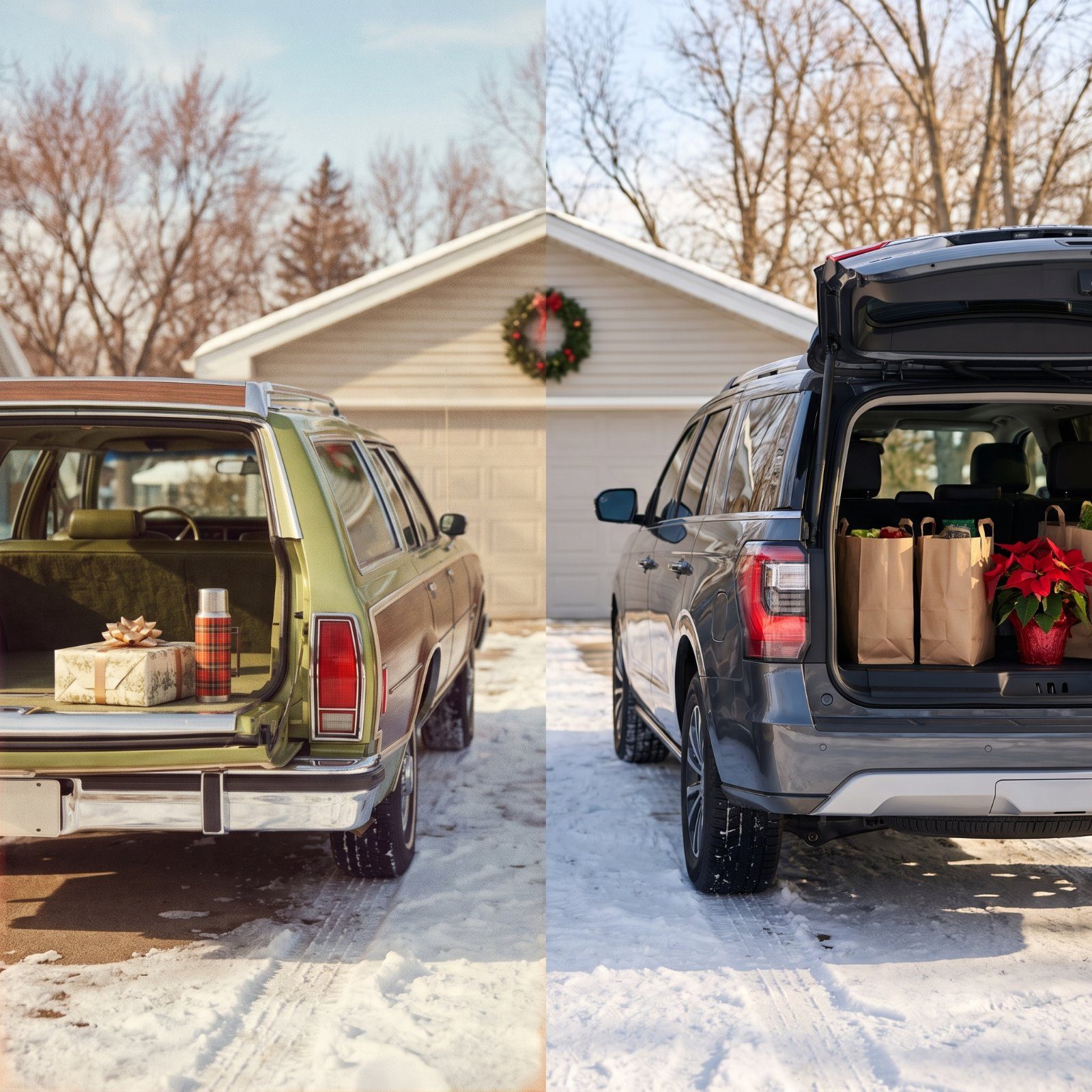
Families packed wrapped presents into enormous station wagons, squeezed suitcases between passengers, and drove through snowy neighborhoods listening to holiday music on AM radios or cassette players.
There were no GPS navigation screens, smartphone connections, or reversing cameras. Drivers relied on paper maps, familiar roads, and sometimes handwritten directions from relatives.
Fast-forward to today, and the traditional Christmas family car has changed dramatically.
Modern SUVs offer heated seats, advanced safety technology, flexible cargo areas, and entertainment systems that would have seemed futuristic in 1975.
But have family cars actually become more interesting, or have we lost some of the charm that made those old holiday journeys unforgettable?
Let’s compare 30 family vehicles from the Christmas season of 1975 with their modern counterparts, exploring how comfort, design, practicality, and technology have evolved.
The comparisons below pair vehicles by family role or brand heritage. They are illustrative before-and-after comparisons, not claims that every modern vehicle is a direct successor to the older model.
Part 1: The Great American Christmas Family Cars
1. Ford Country Squire (1975) vs. Ford Expedition (Now)

Christmas 1975: The Ford Country Squire was the quintessential American family holiday vehicle. Its woodgrain sides, expansive interior, and rear-facing optional third-row seating made it ideal for large families heading to Christmas dinner.
Presents, suitcases, winter coats, and holiday food could all travel together.

Christmas now: The Ford Expedition fills a similar role for modern families, offering three-row seating, substantial luggage space, and available four-wheel drive.
The biggest change is technology. Modern safety systems, cameras, navigation, and climate controls make long winter journeys considerably more convenient.
Biggest difference: Classic station wagon charm versus modern SUV comfort and versatility.
2. Chevrolet Caprice Estate (1975) vs. Chevrolet Traverse (Now)

Christmas 1975: The Chevrolet Caprice Estate was a large, comfortable wagon built for relaxed highway cruising.
Its enormous body and spacious rear cargo area made it especially practical for Christmas trips.

Christmas now: The Chevrolet Traverse provides three rows of seating, a modern interior, and a large cargo area.
Families benefit from features such as smartphone connectivity and advanced driver-assistance technology.
Biggest difference: A long, low V8-era family cruiser versus a tall, technology-focused crossover.
3. Buick Estate Wagon (1975) vs. Buick Enclave (Now)

Christmas 1975: The Buick Estate Wagon combined generous space with upscale styling.
Its comfortable seating and traditional American luxury made it well suited to long journeys to visit relatives.

Christmas now: The Buick Enclave offers a quieter, more refined cabin with contemporary technology and flexible seating.
Biggest difference: Traditional luxury with chrome and woodgrain versus modern luxury with digital displays and convenience features.
4. Oldsmobile Custom Cruiser (1975) vs. GMC Yukon (Now)

Christmas 1975: The Oldsmobile Custom Cruiser was designed for families who wanted substantial passenger and luggage capacity.
Its distinctive styling and spacious cabin made it a natural holiday road-trip vehicle.

Christmas now: The GMC Yukon provides a similarly spacious family experience in a modern SUV format, with available three-row seating and advanced equipment.
Biggest difference: Full-size station wagon proportions versus full-size SUV height and capability.
5. Chrysler Town & Country Wagon (1975) vs. Chrysler Pacifica (Now)

Christmas 1975: The Chrysler Town & Country represented comfortable family transportation with a touch of luxury.
Its long roof and generous rear compartment made packing Christmas gifts relatively straightforward.
![Chrysler Pacifica TV Spot, 'Caroling' Featuring Kathryn Hahn, Song by Scott Stallone, MC Rellik [T1] - iSpot](https://images.openai.com/static-rsc-4/L7uDb-b6BEwBPKaHyBF3YL6IVy2r980uLM0kXYwlcJsTzI37dH_sk1flbaV_mus10ccFhlK7QTb45V12svCA2R17ley7rOpHUY0vFshq6P1X4zDK0dfOw6kXGH4T8wAYN2YjlGmG5j6hOVgn3g6R73r_uMQURZcBwcdURDhVCAo?purpose=inline)
Christmas now: The Chrysler Pacifica offers sliding doors, versatile seating arrangements, and a practical interior designed specifically for families.
Biggest difference: Traditional wagon styling versus purpose-built minivan convenience.
6. Pontiac Grand Safari (1975) vs. Chevrolet Suburban (Now)

Christmas 1975: The Pontiac Grand Safari was an enormous family vehicle with substantial passenger space.
It represented an era when large American wagons dominated family travel.

chevroletpasiongustavobaz.com.mx
Christmas now: The Chevrolet Suburban serves families needing exceptional space for passengers, luggage, and holiday supplies.
Biggest difference: A classic wagon designed for highway comfort versus an SUV built for varied family needs.
Part 2: Everyday Family Sedans – Then and Now
7. Chevrolet Impala (1975) vs. Chevrolet Malibu (Recent Generations)

1975: The Chevrolet Impala offered a roomy cabin, soft seats, and a comfortable ride for family journeys.

Now: The final-generation Chevrolet Malibu brought touchscreen technology, improved efficiency, and contemporary safety features to the family sedan. Production ended in 2024.
Biggest difference: Traditional full-size comfort versus a more efficient midsize sedan.
8. Ford LTD (1975) vs. Ford Explorer (Now)
1975: The Ford LTD was a spacious American sedan built for comfortable highway journeys.
Now: The Ford Explorer offers SUV practicality, available three-row seating, and modern driver-assistance technology.
Biggest difference: Low-slung family sedan versus versatile three-row SUV.
9. Plymouth Fury (1975) vs. Chrysler Pacifica (Now)
1975: The Plymouth Fury represented straightforward American family transportation, with generous seating and traditional styling.
Now: The Chrysler Pacifica provides sliding doors and adaptable seating arrangements that simplify traveling with children.
Biggest difference: Conventional sedan practicality versus a family-focused minivan.
10. Dodge Dart (1975) vs. Dodge Durango (Now)
1975: The Dodge Dart was a relatively affordable family car with simple mechanical engineering.
Now: The Dodge Durango represents a larger, more powerful SUV approach to family transportation.
Biggest difference: Compact everyday motoring versus spacious SUV versatility.
11. AMC Matador (1975) vs. Hyundai Santa Fe (Now)
1975: The AMC Matador was an alternative to the more familiar family sedans from America’s largest manufacturers.
Now: The Hyundai Santa Fe offers a spacious crossover design, flexible seating, and modern connectivity.
Biggest difference: Traditional sedan styling versus modern crossover practicality.
12. Cadillac Sedan de Ville (1975) vs. Cadillac Escalade (Now)

1975: The Cadillac Sedan de Ville offered generous dimensions, plush seating, and distinctive American luxury.

Now: The Cadillac Escalade delivers luxury through digital displays, modern cabin materials, and substantial passenger space.
Biggest difference: Chrome-covered luxury sedan versus technology-rich luxury SUV.
Part 3: Compact Cars Families Took to Christmas Dinner
13. Volkswagen Beetle (1975) vs. Volkswagen Tiguan (Now)
1975: The Beetle was compact, economical, and instantly recognizable, although packing Christmas presents required creativity.
Now: The Tiguan offers considerably more cabin space, practical luggage capacity, and modern convenience features.
Biggest difference: Tiny rear-engine family transport versus practical crossover.
14. Toyota Corolla (1975) vs. Toyota Corolla Hybrid (Now)

1975: The Corolla appealed to families who valued affordability and fuel economy.

Now: The Corolla Hybrid continues that practical tradition with hybrid efficiency and modern safety equipment.
Biggest difference: Simple petrol-powered economy car versus sophisticated hybrid transportation.
15. Honda Civic (1975) vs. Honda CR-V (Now)
1975: The early Civic offered efficient, compact transportation during a period of growing interest in smaller cars.
Now: The Honda CR-V provides the additional cargo room and elevated seating position many families prefer.
Biggest difference: Compact hatchback versus spacious family SUV.
16. Datsun 710 (1975) vs. Nissan Rogue (Now)
1975: The Datsun 710 was an economical alternative to larger American cars.
Now: The Nissan Rogue, known as the X-Trail in some markets, offers greater interior flexibility and modern technology.
Biggest difference: Traditional compact car versus contemporary crossover.
17. Ford Pinto Wagon (1975) vs. Ford Escape/Kuga (Recent Generations)
1975: The Pinto Wagon offered a compact cargo area and affordable transportation, although the Pinto name is also associated with serious historical fuel-system safety controversies.
Now: The Ford Escape, known as the Kuga in many markets, offers modern family-car safety engineering and more advanced powertrain choices. Availability varies by market and model year.
Biggest difference: Basic compact wagon versus modern family crossover.
18. Chevrolet Vega Kammback (1975) vs. Chevrolet Equinox (Now)
1975: The Vega Kammback offered a practical small-wagon body, although the Vega developed a troubled reputation for mechanical and corrosion problems.
Now: The Chevrolet Equinox provides more space, modern technology, and a higher seating position.
Biggest difference: Minimalist small wagon versus a contemporary compact SUV.
Part 4: European Christmas Family Cars
19. Volvo 245 Estate (1975) vs. Volvo XC90 (Now)

1975: The Volvo 245 was boxy, spacious, and practical. Its large rear compartment made it particularly suitable for luggage-heavy holiday trips.

Now: The Volvo XC90 combines premium family comfort with modern safety technology and available electrified powertrains.
Biggest difference: Simple Scandinavian estate versus sophisticated luxury SUV.
20. Mercedes-Benz W115 (1975) vs. Mercedes-Benz E-Class Estate (Now)
1975: The Mercedes-Benz W115 offered understated styling and solid engineering for families who preferred traditional sedans.
Now: The E-Class Estate provides generous luggage space, advanced infotainment, and modern long-distance comfort.
Biggest difference: Mechanical simplicity versus premium technology.
21. BMW 5 Series E12 (1975) vs. BMW 5 Series Touring (Now)
1975: The early BMW 5 Series combined family-car usefulness with engaging driving characteristics.
Now: The 5 Series Touring adds extensive digital technology, sophisticated suspension systems, and substantial cargo space.
Biggest difference: Classic sports-sedan character versus modern luxury-estate versatility.
22. Peugeot 504 Break (1975) vs. Peugeot 5008 (Now)
1975: The Peugeot 504 Break was a comfortable, durable estate suitable for large families and difficult road conditions.
Now: The Peugeot 5008 brings a modern SUV body, adaptable family accommodation, and contemporary technology.
Biggest difference: Traditional long-roof estate versus modern multi-purpose SUV.
23. Renault 12 Estate (1975) vs. Renault Austral (Now)
1975: The Renault 12 Estate offered practical luggage space and economical family transportation.
Now: The Renault Austral provides a higher driving position, digital displays, and available hybrid technology.
Biggest difference: Basic family estate versus technology-focused crossover.
24. Volkswagen Passat B1 Estate (1975) vs. Volkswagen Passat Estate (Now)

1975: The original Passat Estate offered practical European family transportation in a compact, efficient package.

Now: The modern Passat Estate continues the long-roof tradition with improved comfort, efficiency, and technology.
Biggest difference: Straightforward 1970s estate versus refined modern family wagon.
Part 5: Unusual Christmas Cars and Modern Alternatives
25. AMC Pacer (1975) vs. Kia Soul (Recent Generations)
1975: The AMC Pacer stood out with its unusually wide body and large windows.
Now: The Kia Soul offers similarly unconventional styling in a more modern, upright package.
Biggest difference: Experimental 1970s design versus contemporary boxy practicality.
26. Chevrolet Suburban (1975) vs. Chevrolet Suburban (Now)

1975: The Chevrolet Suburban was already a serious family hauler, offering truck-based utility and a large interior.

Now: The modern Suburban retains its substantial size while adding contemporary comfort, technology, and safety features.
Biggest difference: Rugged utility-focused transportation versus refined full-size family SUV.
27. Jeep Wagoneer (1975) vs. Jeep Grand Wagoneer (Now)
1975: The Jeep Wagoneer offered a distinctive combination of passenger comfort and four-wheel-drive capability.
Now: The Grand Wagoneer takes that concept into the luxury SUV category, with considerably more sophisticated equipment.
Biggest difference: Classic utility luxury versus premium three-row SUV comfort.
28. International Harvester Travelall (1975) vs. Toyota Sequoia (Now)
1975: The Travelall was a large, rugged family vehicle capable of carrying passengers and substantial luggage.
Now: The Toyota Sequoia provides a similar large-SUV role with modern engineering and available four-wheel-drive capability.
Biggest difference: Agricultural and utility-vehicle roots versus refined modern family transportation.
29. Volkswagen Type 2 Microbus (1975) vs. Volkswagen ID. Buzz (Now)

1975: The Volkswagen Microbus offered distinctive styling and flexible passenger accommodation, making it a memorable choice for family adventures.

Now: The electric Volkswagen ID. Buzz reinterprets the Microbus’s friendly styling with modern electric-vehicle technology.
Biggest difference: Rear-engine combustion-powered classic versus modern electric people carrier.
30. Ford Gran Torino Wagon (1975) vs. Kia EV9 (Now)
1975: The Ford Gran Torino Wagon was a substantial American family vehicle, built around traditional long-roof styling and relaxed highway travel.
Now: The Kia EV9 offers a modern electric interpretation of spacious family transportation, with three-row seating and a large, upright body.
Biggest difference: Traditional petrol-powered station wagon versus electric three-row SUV.
What Changed Most Between Christmas 1975 and Today?
| Feature | Christmas 1975 | Christmas today |
|---|---|---|
| Popular family vehicle | Sedans and station wagons | SUVs, crossovers and minivans |
| Navigation | Paper maps | GPS and smartphone navigation |
| Music | AM/FM radio, available cassette or 8-track | Streaming and Bluetooth |
| Safety | Seat belts, limited crash protection | Airbags, electronic stability control, driver assistance |
| Heating | Basic cabin heating | Automatic climate control and available heated seats |
| Cargo access | Traditional trunks and tailgates | Power tailgates and flexible cargo systems |
| Fuel choices | Primarily petrol and diesel | Petrol, diesel, hybrid and electric |
| Holiday experience | Simpler and more hands-on | More connected and convenient |
Why Families Loved Station Wagons in 1975
Station wagons were particularly useful because they combined passenger-car comfort with substantial luggage space.
A family could pack Christmas presents, winter clothing, food, and overnight bags into one vehicle.
Many full-size American wagons also offered optional additional seating.
Their long, low bodies made them distinctive, and woodgrain trim became a memorable part of 1970s family-car culture.
Today, many SUVs serve essentially the same purpose, although their taller bodies and modern technology create a different experience.
Were Cars Safer in 1975 or Today?
Modern vehicles are generally much safer.
Contemporary cars benefit from improved crash structures, airbags, anti-lock braking systems, electronic stability control, and other safety developments.
In 1975, many of these technologies were either unavailable or uncommon.
Large classic cars sometimes feel reassuring because of their size and weight, but size alone does not establish crashworthiness.
A modern family vehicle generally provides significantly better occupant protection than a comparable car from 1975.
Which Christmas Family Cars Have the Most Nostalgia?
The Ford Country Squire, Chevrolet Caprice Estate, Volvo 245, Volkswagen Microbus, and Jeep Wagoneer are especially evocative of family travel in the 1970s.
Their distinctive designs remind enthusiasts of holiday road trips, childhood memories, and a time when family cars had very different personalities.
Frequently Asked Questions
What was a popular family car in 1975?
Popular choices varied by country, but American families commonly drove vehicles such as the Chevrolet Impala, Ford LTD, Ford Country Squire, and other large sedans and station wagons.
Why did SUVs replace station wagons?
SUVs and crossovers gained popularity because of their higher seating positions, flexible interiors, available all-wheel drive, and changing consumer preferences.
Were 1975 cars more comfortable than modern cars?
Some 1975 vehicles offered exceptionally soft seats and smooth highway rides. However, modern vehicles generally provide better climate control, noise insulation, safety, and convenience.
Are classic station wagons collectible today?
Yes. Certain models have developed strong enthusiast followings, particularly well-preserved examples with distinctive styling, rare equipment, or desirable engines.
Can you still use a 1975 station wagon for Christmas road trips?
Yes, provided the vehicle is roadworthy, properly maintained, insured, and suitable for the journey. Owners should remember that classic vehicles generally lack modern safety features.
Final Thoughts: Christmas Memories on Four Wheels
Christmas family cars have changed enormously over the past five decades.
In 1975, a station wagon with woodgrain sides and a huge rear cargo compartment represented the perfect holiday vehicle for many families.
Today, modern SUVs, hybrids, minivans, and electric vehicles offer technology and convenience that earlier generations could scarcely have imagined.
But despite all these changes, the purpose of the family Christmas car remains remarkably similar.
It carries presents, food, luggage, and the people we love.
The engines have changed. The dashboards have changed. Even the shape of the family car has changed.
But the best part of the Christmas journey has always been the same: arriving together.