Two Beetles, One Garage, and a Mystery
The rain had stopped just before sunrise when Daniel unlocked the doors of his grandfather’s old garage.
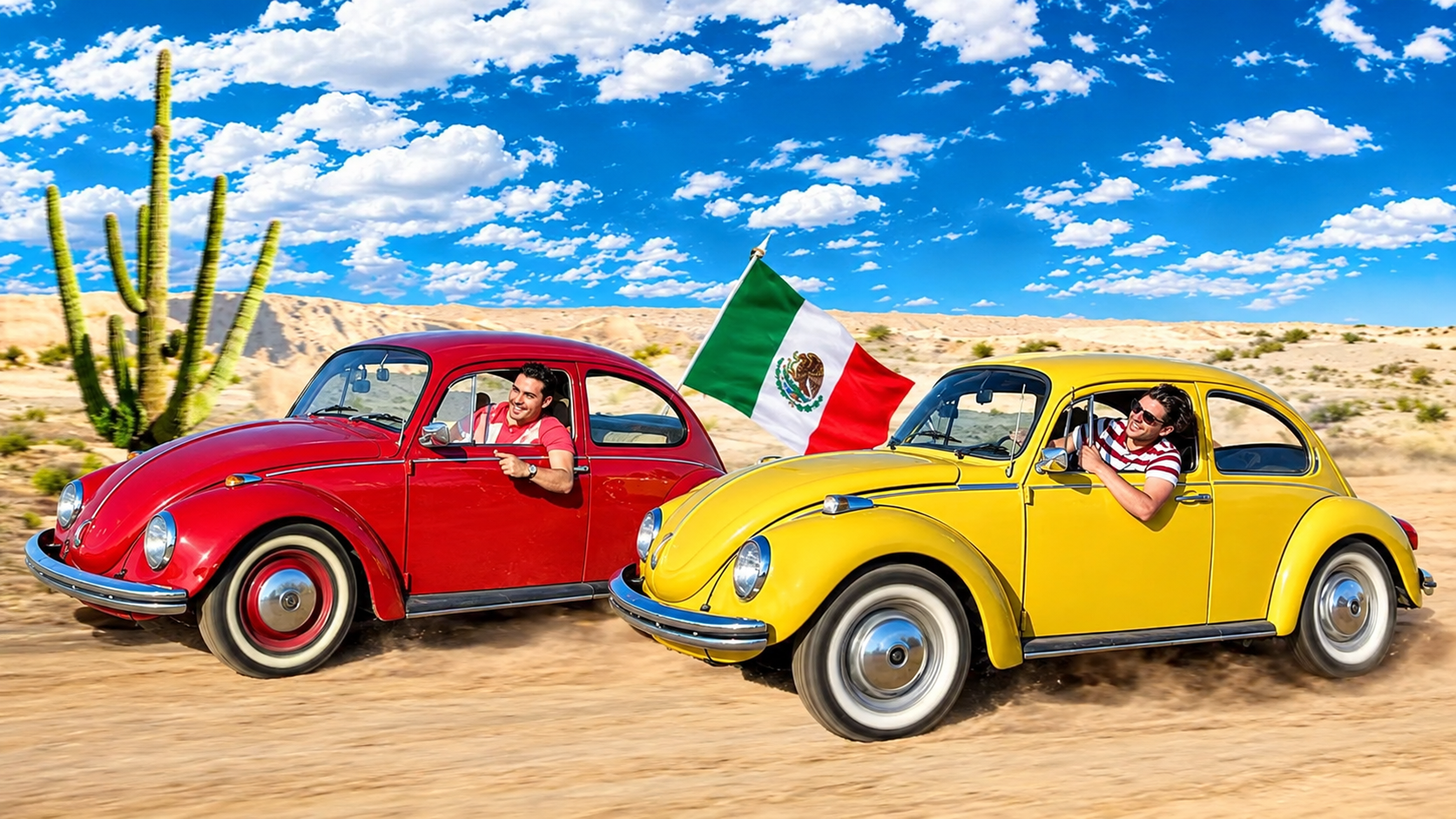
Inside, beneath two dusty covers, sat two Volkswagen Beetles.
At first glance, they looked almost identical.
Both had the familiar rounded roof. Both wore the unmistakable Beetle shape. Both had the same cheerful personality that had made the little Volkswagen famous around the world.
But there was something different about them.
Daniel’s grandfather had left a handwritten note on the workbench:
“Take them both for a drive. Then you’ll understand.”
Daniel smiled.
He had spent years around classic cars, but he had never completely understood why some enthusiasts preferred the Standard Beetle while others specifically searched for a Super Beetle.
That morning, he decided to solve the mystery.
The Standard Beetle: The Familiar Classic
Daniel uncovered the first car.
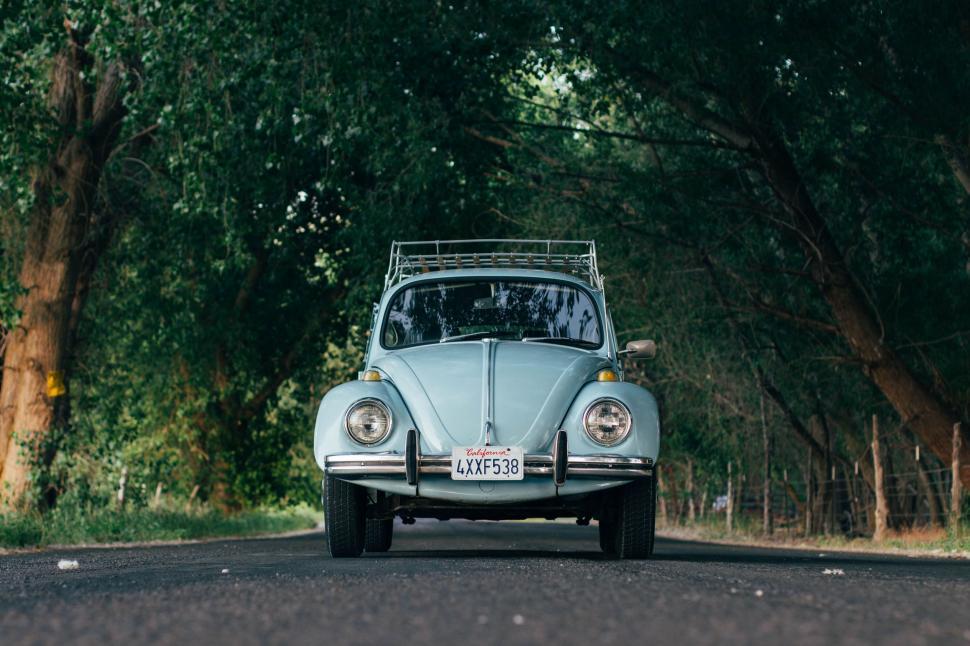
It was a traditional Beetle with the classic front suspension arrangement and unmistakable compact proportions.
Its design was simple, familiar, and wonderfully mechanical.
A Simple Philosophy
The Standard Beetle represented the original philosophy of the car: straightforward engineering, compact dimensions, and a design that changed gradually over the years.
Daniel opened the front trunk and looked inside.
There wasn’t an overwhelming amount of space, but everything seemed to have a purpose.
He turned the key.
The air-cooled engine came alive with its characteristic sound.
“Still here,” Daniel whispered.
He eased the car onto the road.
The steering felt light and direct. The ride had the unmistakable character of an older Beetle.
It wasn’t trying to be modern.
That was exactly why Daniel liked it.
Then Daniel Discovered the Super Beetle
When he returned to the garage, Daniel uncovered the second car.
At first, he wondered whether his grandfather had simply purchased another Beetle.
Then he looked more closely.
The front end was different.
The car seemed slightly longer and more spacious.
Daniel remembered the note.
“Take them both for a drive.”
So he grabbed the keys.
What Is a Super Beetle?
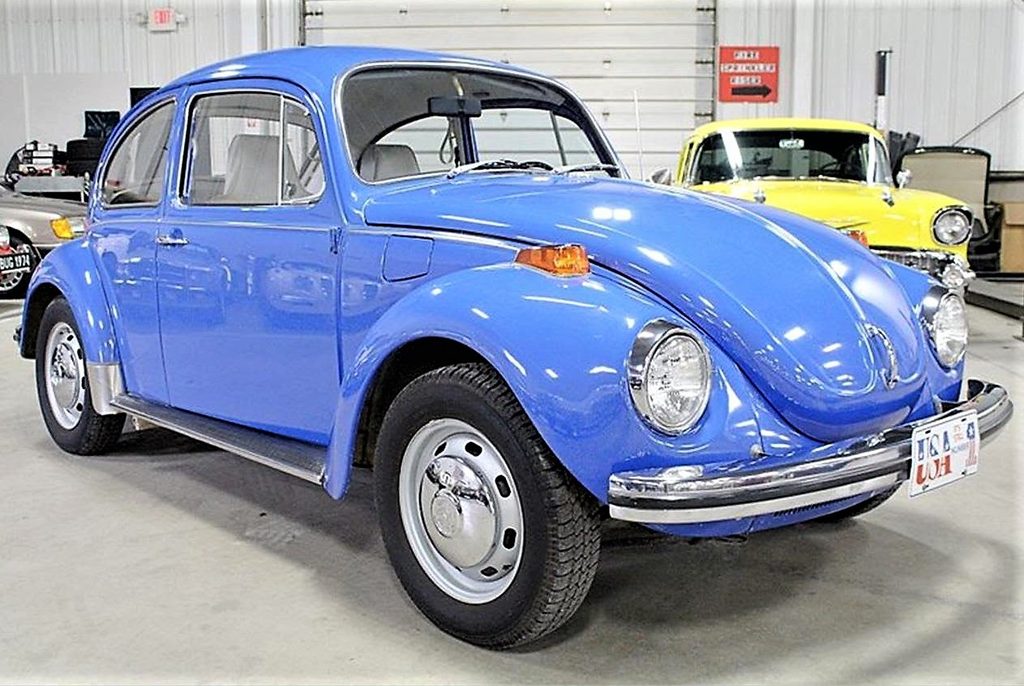
The Super Beetle was introduced for the 1971 model year in the United States as a development of the familiar Beetle.
Volkswagen made several important changes, particularly underneath the front of the car.
Instead of the traditional Beetle’s torsion-bar front suspension, the Super Beetle used MacPherson struts.
That change allowed Volkswagen to redesign the front section and create additional luggage space.
From the outside, however, the difference could be surprisingly subtle.
And that was part of the mystery.
Standard Beetle vs. Super Beetle: The Important Differences
Daniel parked both cars next to each other.
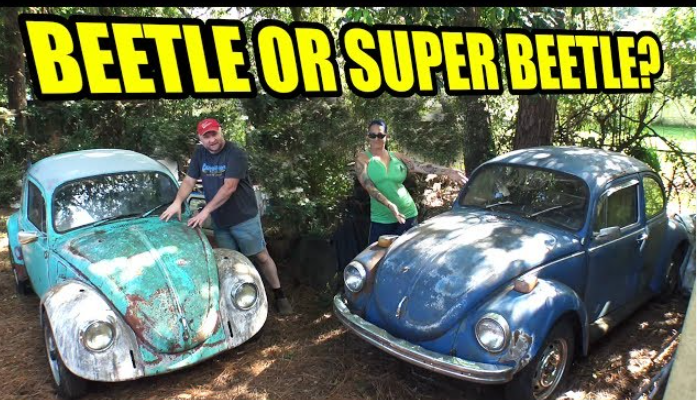
Now he could finally see the differences.
1. Front Suspension
This is one of the biggest mechanical differences.
The traditional Standard Beetle used a torsion-bar front suspension.
The Super Beetle adopted MacPherson strut front suspension.
The new arrangement changed the front-end structure and contributed to the Super Beetle’s different driving characteristics.
2. More Front Trunk Space
The Super Beetle’s redesigned front end provided more usable luggage space.
For someone who wanted to use the Beetle for longer trips, that extra room could make a meaningful difference.
Daniel opened both trunks.
His grandfather had apparently anticipated the comparison.
Inside the Super Beetle was a small suitcase.
Inside the Standard Beetle was an old toolbox.
Daniel laughed.
“Of course.”
3. Different Exterior Appearance
The differences become easier to notice when the cars are parked side by side.
The Super Beetle has a somewhat longer-looking front section.
Later Super Beetles also received additional exterior changes.
One particularly recognizable version arrived in the 1973 model year with a curved windshield, giving the car a noticeably different appearance.
The Standard Beetle retained the more traditional flat windshield design.
4. Driving Experience
This was the part Daniel wanted to understand most.
He drove the Standard Beetle first.
It felt unmistakably vintage.
The car seemed light, simple, and connected to the road.
Then he climbed into the Super Beetle.
The difference wasn’t enormous, but it was noticeable.
The Super Beetle’s revised front suspension gave it a somewhat different feel, particularly in steering and ride behavior.
It still felt like a Beetle.
But it felt like a Beetle that had been given a small dose of modernization.
The Mystery in the Glovebox
When Daniel returned to the garage, he noticed something he hadn’t seen before.
There was a second envelope inside the Super Beetle’s glovebox.
He opened it.
Inside was another note from his grandfather.
It read:
“The question was never which Beetle is better. The question is what kind of classic you want to drive.”
Daniel sat quietly for a moment.
Suddenly, the entire comparison made sense.
Standard Beetle vs. Super Beetle: A Quick Comparison
| Feature | Standard Beetle | Super Beetle |
|---|---|---|
| Front suspension | Traditional torsion-bar design | MacPherson strut design |
| Front luggage area | More compact | More spacious |
| Overall character | Classic and traditional | More refined evolution |
| Steering/ride feel | Traditional Beetle character | Revised front-end behavior |
| Windshield | Traditional flat style on many models | Curved windshield on later versions |
| Collector appeal | Strong historical appeal | Distinctive variant with its own following |
| Best suited to | Fans of classic Beetle simplicity | Drivers who appreciate the updated design |
Exact equipment and styling varied by model year and market.
Which Beetle Is Right for You?
Daniel looked at the two cars again.
Neither one suddenly seemed better than the other.
They simply told different stories.
The Standard Beetle
The Standard Beetle may appeal to someone who wants the traditional Beetle experience.
Its straightforward engineering, familiar proportions, and classic appearance capture the character many enthusiasts associate with the original Beetle formula.
It feels like stepping into automotive history.
The Super Beetle
The Super Beetle may appeal to someone who appreciates the Beetle but wants some of Volkswagen’s later engineering changes.
Its MacPherson strut front suspension, additional front luggage capacity, and later styling updates give it a distinct identity.
It is still unmistakably a Beetle—but with a slightly different personality.
The Final Drive
The sun was beginning to set when Daniel took the Standard Beetle out one final time.
He drove slowly along the country road where his grandfather had taught him to drive.
Then he returned and took the Super Beetle.
The same road.
The same sunset.
Two very different experiences.
When he finally parked both cars in the garage, Daniel understood the message.
The Standard Beetle represented the classic formula that had become an icon.
The Super Beetle represented evolution without abandoning that identity.
His grandfather hadn’t left him two identical cars.
He had left him two chapters of the same story.
Daniel placed the notes carefully back inside the glovebox.
Then he closed the garage doors.
For the first time, he didn’t wonder which Beetle he would keep.
He knew.
He would keep both.
Because sometimes the most interesting classic-car comparison isn’t about finding a winner.
It’s about discovering how a legend changed over time.
Final Thoughts
The Standard Beetle and Super Beetle share the same unmistakable Volkswagen heritage, but their differences go beyond appearance.
The Standard Beetle preserves the traditional character of the classic design, while the Super Beetle introduced significant front-suspension and packaging changes that gave it a somewhat different driving experience.
For collectors, the choice can come down to personal taste, originality, condition, model year, and the kind of driving experience they want from a classic Volkswagen.
In the end, both are important parts of the Beetle story.
One represents tradition.
The other represents evolution.
And together, they show how Volkswagen managed to keep one of the world’s most recognizable cars relevant as the years passed.