Few classic cars have as much personality as the Volkswagen Beetle. Its rounded body, distinctive headlights, and unmistakable silhouette have made it an automotive icon for generations. But what happens when that timeless shape meets an aggressive modern custom build?
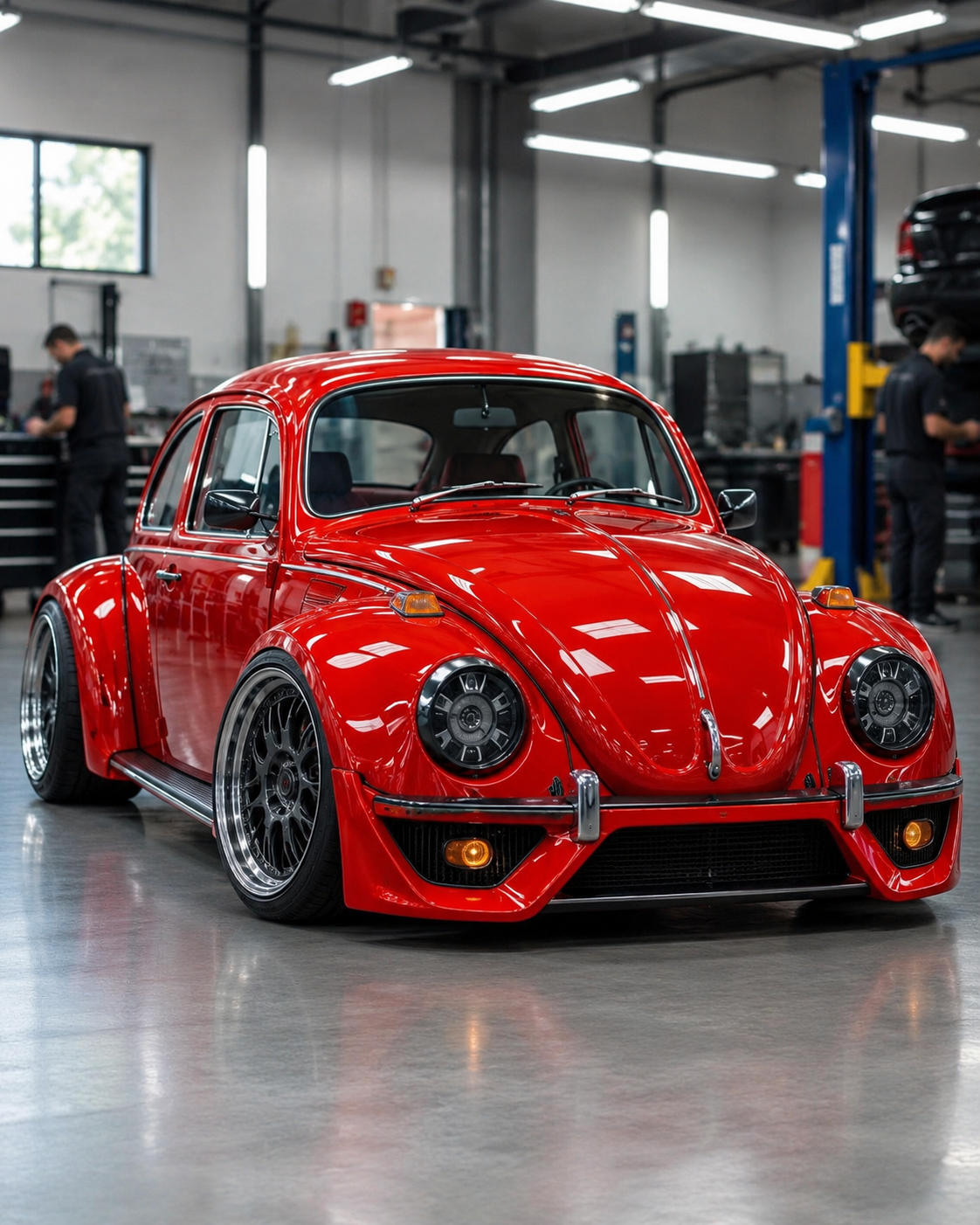
The result is a car like the striking red Beetle in your reference image: glossy scarlet paint, dramatically widened fenders, deep-dish alloy wheels, a low stance, and a redesigned front bumper that gives the classic car a bold new identity.
This design blends vintage character with contemporary tuning style. It looks ready for a custom-car show, turning heads with its combination of retro charm and motorsport-inspired details.

Image concept: a modern custom interpretation of the classic Beetle, inspired by the supplied reference photo.
1. The Classic Beetle Shape With a Modern Attitude

The first thing that makes this build special is the way it preserves the Beetle’s familiar outline while changing its overall personality.
The curved hood, rounded roof, and compact cabin still feel unmistakably classic. However, the wider bodywork and low ride height make the car look more muscular and purposeful.
The Volkswagen Beetle became famous because its design was instantly recognizable, and its distinctive shape remained central to its identity across generations.
Volkswagen
+1
This custom concept takes advantage of that recognition. Instead of hiding the original character, it emphasizes the familiar curves and surrounds them with modern styling details.
What makes the design stand out?
- A bright red finish that catches the light.
- Wide fenders that give the car a broader profile.
- A lowered stance that emphasizes its compact shape.
- Dark alloy wheels that contrast with the bodywork.
- Modernized front-end details that create a more aggressive appearance.
The result is a classic car that looks both nostalgic and fresh.
2. Glossy Red Paint That Demands Attention

Color is one of the most important parts of this build. The vibrant red finish highlights the Beetle’s rounded panels and makes the car stand out against its dark wheels and black lower-body details.
A quality paint job is about more than choosing a striking color. Preparation, panel condition, primer, paint application, and protective clear coat all contribute to the final appearance.
How to achieve a showroom-quality finish
- Inspect the body for rust, dents, and damaged paint.
- Repair imperfections before applying a new finish.
- Prepare the surface carefully to help the paint adhere.
- Apply the chosen red color using a suitable automotive paint system.
- Finish with the appropriate clear coat and professional polishing.
For a high-quality restoration or custom build, use an experienced automotive paint specialist. The exact process depends on the vehicle’s existing finish and the products selected.
3. Wide Fender Flares for a Bold Widebody Look

The widened fenders are among the most dramatic features in the reference image. They extend beyond the original body lines, creating space for the broad wheels and giving the Beetle a more planted appearance.
Widebody styling can make a small classic car look much more substantial. The trick is to keep the shapes balanced so the added width follows the Beetle’s rounded body rather than appearing disconnected from it.
What to consider before installing a widebody kit
- Choose panels designed for the exact body generation.
- Check wheel clearance during steering and suspension movement.
- Make sure the tires are covered as required by local regulations.
- Plan the mounting points and paint finish before final assembly.
- Consider how added bodywork will affect repair and maintenance.
A widebody kit should be selected as part of a complete design plan, not as an isolated cosmetic upgrade.
4. Deep-Dish Alloy Wheels and Low-Profile Tires

The dark multi-spoke wheels create a strong contrast against the red body. Their deep-dish appearance adds visual depth, while the low-profile tire setup gives the car a modern tuning aesthetic.
However, a wheel that looks perfect in a photograph still needs to be suitable for the car. Wheel diameter, width, offset, tire load rating, and brake clearance all matter.
Choosing the right wheel setup
A well-planned combination should:
- Fit the car’s hub and mounting specifications.
- Provide adequate clearance around the brakes and suspension.
- Avoid rubbing against the fenders.
- Use tires suitable for the vehicle’s weight and intended use.
- Preserve predictable steering and braking behavior.
Extremely wide wheels or very low-profile tires can compromise comfort and increase the risk of wheel or tire damage on rough roads. For a car driven regularly, practical fitment is just as important as appearance.
5. A Lowered Stance With Carefully Planned Suspension

The low stance helps give this Beetle its show-car personality. Bringing the body closer to the wheels emphasizes the widened fenders and makes the car appear more compact and athletic.
Lowering a classic vehicle requires careful planning, especially when the car has older suspension components. A setup that looks impressive while parked must also provide adequate suspension travel, ground clearance, and safe handling.
Step-by-step suspension planning

Step 1: Inspect the existing suspension
Check worn components, bushings, joints, shocks, and the vehicle’s structural condition before deciding on changes.

Step 2: Decide on a realistic ride height
Consider road conditions, speed bumps, driveway angles, and the amount of suspension travel the vehicle needs.

Step 3: Complete alignment and safety checks
Have a qualified specialist verify the geometry, tire clearance, steering, and braking after modifications.
The goal is to create a car that looks low and purposeful without making it unsafe or impractical to drive.
6. Modernized Headlights and an Aggressive Front Bumper

The front of the featured Beetle combines two contrasting ideas: the familiar round headlights of a classic car and the sharp styling of a modern custom build.
The black lower grille, sculpted bumper, and small amber lamps make the front end look wider and more dramatic. These elements also give the car a distinct personality without removing the rounded shape that makes a Beetle recognizable.
Styling tips for the front end
- Keep the headlights visually balanced.
- Coordinate the grille and bumper with the wheel finish.
- Use lighting components compatible with the vehicle’s electrical system.
- Ensure all lights are correctly aimed and comply with local requirements.
- Avoid blocking cooling openings or essential vehicle components.
A carefully designed front bumper should complement the original body curves rather than overpower them.
7. The Rear View: Classic Curves With Custom Details

The rear view is just as important as the front. The Beetle’s rounded engine cover and curved roofline provide a familiar silhouette, while wider rear fenders and a custom lower bumper make the car appear more muscular.
The reference image also shows a sportier lower rear section and twin exhaust outlets. These are visual features of the pictured concept; the actual mechanical layout and exhaust configuration would need to be confirmed on a real build.
Details worth planning
- Keep the rear lights visible and functional.
- Make sure the bumper is securely mounted.
- Use an exhaust system appropriate for the engine and local noise and emissions rules.
- Check rear-wheel clearance under load.
- Preserve access to service points and essential components.
A coordinated rear design makes the car look complete from every angle.
8. Interior Ideas to Match the Red Exterior

Although the exterior gets most of the attention, a well-finished interior can make the entire project feel more considered.
A black interior with red stitching would complement the exterior without making the cabin look too busy. Restored original trim can preserve the car’s vintage charm, while discreet modern additions can improve comfort and usability.
Interior upgrades to consider
- Reupholstered seats with durable materials.
- A restored dashboard and steering wheel.
- Updated sound equipment installed securely.
- Fresh carpets, door panels, and headlining.
- Properly fitted seat belts and safety equipment.
For a classic Beetle, retaining some original interior details often creates a more appealing result than replacing every component with modern parts.
9. Step-by-Step: How to Build Your Own Custom Red Beetle

If you want to recreate this style, planning the project in stages can help you control the budget and avoid incompatible modifications.

Step 1: Choose a suitable Beetle
Find a car with a sound structure and a clear maintenance history. Inspect for rust, previous repairs, and mechanical issues before committing to a purchase.

Step 2: Plan the bodywork and paint
Decide on the shade of red, fender style, bumper design, and trim finish. Repair the body before applying the final paint.

Step 3: Test-fit the body kit and wheels
Confirm panel fitment, wheel offset, tire size, and clearance before final paint or permanent installation.

Step 4: Complete the mechanical work
Service the engine, brakes, steering, and suspension. Make sure modifications are appropriate for the vehicle’s actual year and specification.

Step 5: Finish, inspect, and detail
Complete the interior, align the wheels, test all lights, and arrange a professional safety inspection before road use.
10. How Much Could a Custom Beetle Build Cost?
The total cost depends on the condition of the original car, the availability of parts, labor rates, and the extent of the transformation. A simple cosmetic refresh will generally require a different budget from a complete widebody build with suspension, wheel, engine, and interior changes.
| Project level | Typical scope |
|---|---|
| Basic refresh | Paint correction, detailing, minor trim work |
| Styling-focused build | Custom paint, wheels, selected exterior upgrades |
| Widebody show car | Fender kit, custom bumpers, wheels, suspension, paint |
| Full restoration and custom build | Body restoration, mechanical work, interior, paint, and extensive modifications |
These are project categories, not price estimates. Obtain written quotes for bodywork, paint, parts, mechanical repairs, and final inspection before starting.
It is also wise to keep a contingency budget for hidden rust, worn components, and parts that need custom fabrication.
11. Why the Volkswagen Beetle Is Perfect for Customization

The Beetle has inspired generations of owners to personalize their cars. Its recognizable shape has lent itself to restorations, show cars, performance projects, and even off-road builds such as Baja Bugs. Volkswagen’s own heritage coverage describes how enthusiasts adapted the platform for different styles and purposes.
Volkswagen
+1
That flexibility is part of its lasting appeal. Some owners prefer an authentic restoration with period-correct details, while others enjoy creating something completely individual.
The red widebody concept represents the more dramatic end of that spectrum. It takes a familiar classic and reimagines it through modern wheels, custom bodywork, and a much more aggressive stance.
Conclusion: A Classic Beetle Reimagined for a New Generation
The ultimate red Volkswagen Beetle custom build is a celebration of classic design with a bold modern twist. Its glossy red paint, widened fenders, deep-dish wheels, lowered stance, and redesigned bumpers create a striking look while preserving the personality of the original car.
The most successful build, however, is about more than appearance. Careful planning, compatible parts, quality craftsmanship, and attention to safety are what turn an exciting concept into a satisfying real-world project.
Whether you would keep the Beetle close to its original design or transform it into a full show car, its rounded silhouette gives you an unforgettable foundation. Sometimes, the best way to celebrate an automotive icon is to give it a fresh identity without losing the details that made it special in the first place.