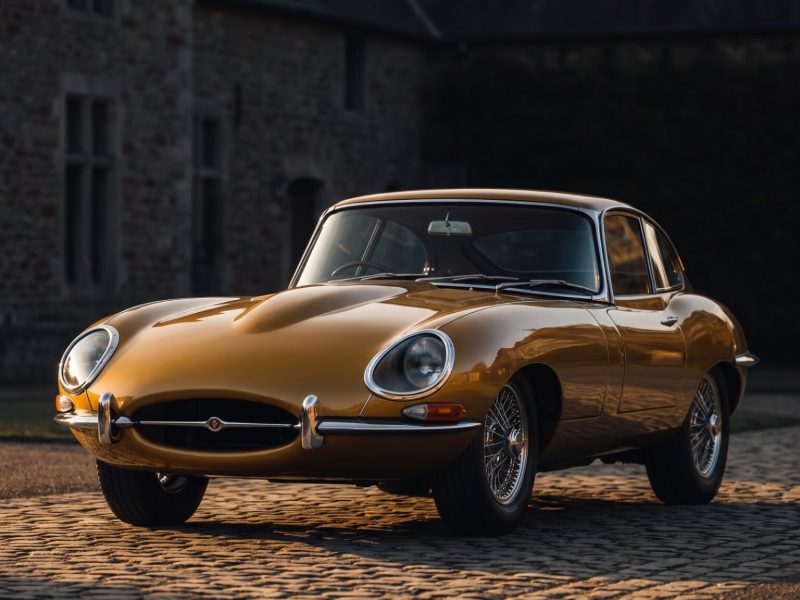

Image suggestion: The historic Rolls-Royce Silver Ghost, a symbol of early automotive excellence.
Some of the world’s most luxurious cars are owned by royalty, celebrities, business leaders, and wealthy collectors. Their polished bodies, elegant interiors, and powerful engineering represent a level of craftsmanship that few automobile brands can match.
One name stands above the rest: Rolls-Royce.
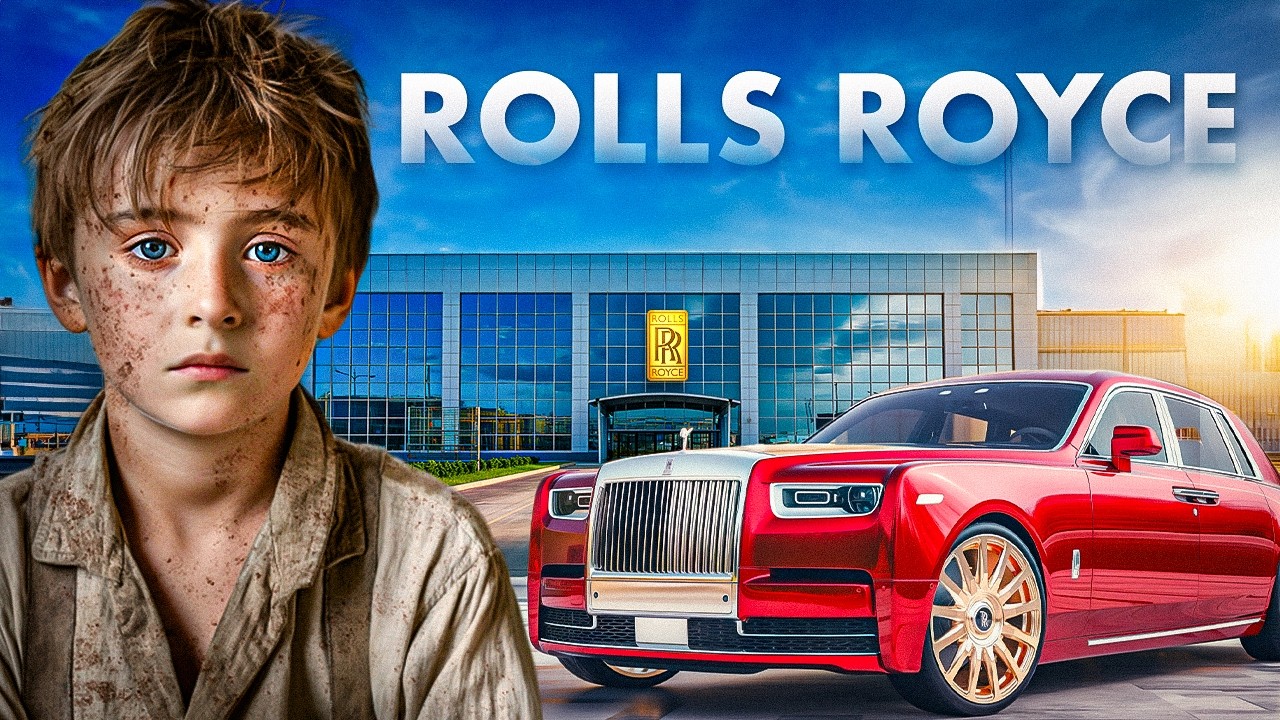
But the story behind this legendary name began far from a world of wealth and privilege. One of the men responsible for its success, Henry Royce, experienced poverty, family tragedy, and years of difficult work before becoming a celebrated engineer.
He didn’t begin with a fortune, a powerful family, or a grand automobile factory. He began with determination, curiosity, and a willingness to learn.
How did a boy who once delivered newspapers become one of the most influential figures in automotive history? His journey reveals how persistence, technical skill, and an uncompromising commitment to quality helped create a world-famous brand.
1. A Childhood Marked by Poverty

Henry Royce was born in 1863 in England. His early life was far removed from the comfort and luxury that would eventually become associated with his name.
When Henry was just four years old, his father’s business failed. The family suffered severe financial hardship, and their circumstances quickly deteriorated. A few years later, Henry lost his father, leaving his mother to support the family through difficult circumstances.
There was little room for a carefree childhood. Henry began delivering newspapers and taking on small jobs to help make ends meet.
For many children, such hardship might have limited their opportunities. For Henry, it became part of a life that demanded resourcefulness and determination.
He had no guarantee of success. What he did have was an eagerness to understand how things worked—and that curiosity would eventually change his future.
2. The Apprenticeship That Changed His Life

At the age of 14, Henry received an opportunity that would shape his future. With help from an aunt, he secured an apprenticeship connected with the Great Northern Railway Company.
For a young boy from a struggling family, this was an important step forward.
During his apprenticeship, Henry gained practical experience with machinery and engineering. He also studied whenever he could, building his knowledge of mathematics, mechanics, and electricity.
He understood that hard work alone was not enough. To improve his circumstances, he needed skills that could open new doors.
Over time, he became a capable mechanic and developed the technical foundation that would guide his career.
By his early twenties, Henry was working in the electrical industry. He was moving forward, but financial uncertainty would soon force him to make another life-changing decision.
3. Starting a Business With Just £20

Henry’s work in the electrical industry gave him valuable experience, but the business environment was far from secure. When the company he worked for encountered financial difficulties, his future became uncertain.
Rather than depending entirely on another employer, Henry decided to build something of his own.
In 1884, he established F. H. Royce & Company with his business partner, Ernest Claremont. According to the supplied story, Royce began with approximately £20 in savings—a modest amount for someone hoping to build a successful business.
The company started small. It repaired machinery and manufactured practical electrical products, including components for lighting and doorbells.
These were not glamorous products, but they served a growing market. Henry focused on making useful equipment and improving the quality of what his business produced.
Gradually, the company expanded. By 1900, its sales had reportedly exceeded £20,000.
For Henry, this growth represented much more than money. It was evidence that skill, careful work, and persistence could turn a small beginning into a serious business.
Yet his greatest achievement was still ahead of him.
4. The Troublesome Car That Inspired a Revolution

At the beginning of the twentieth century, Henry’s electrical business faced increasing competition. Foreign manufacturers entered the market, prices fell, and the company’s financial position became more difficult.
The pressure also affected Henry’s health. Seeking a change of pace, he followed medical advice to get fresh air and bought a French automobile called a Decauville.
Unfortunately, the vehicle disappointed him.
It was noisy, unreliable, and uncomfortable. Its performance fell short of what Henry believed a properly engineered machine should deliver.
Many people would simply have accepted the car’s shortcomings. Henry approached the problem differently.
He examined the machine, studied its weaknesses, and began making improvements. His engineering mind saw opportunities where others saw only frustration.
Soon, he moved beyond repairs and began redesigning the automobile.
This experience sparked a powerful idea: if he could improve an existing car so dramatically, why not build a better one from the beginning?
That question marked a turning point in his life. The skills he had developed through years of electrical and mechanical work were about to enter a new industry.
5. Building a Better Automobile

press.rolls-roycemotorcars.com
Henry Royce began developing his own automobile with a small team. His ambition was not simply to produce another car. He wanted to create a vehicle that was smoother, quieter, stronger, and more dependable than the alternatives available at the time.
He paid close attention to every detail, from the engine and chassis to the weight and reliability of individual components.
In 1904, his first car—a 10-horsepower, two-cylinder model—was tested on the road. Its performance encouraged him to continue. He developed additional cars, testing them carefully and refining the design.
Royce’s approach was straightforward: identify a weakness, understand its cause, and improve it.
He wasn’t satisfied with something that merely worked. He wanted it to work exceptionally well.
This philosophy would become central to the reputation of Rolls-Royce. The company would eventually be recognized not only for luxury but also for the engineering standards behind its vehicles.
However, Henry still needed someone who could help introduce his automobiles to a wider market.
6. The Meeting That Created Rolls-Royce

Around this time, another automobile enthusiast was searching for something special. His name was Charles Rolls.
Unlike Royce, Rolls came from a wealthy background. He was interested in automobiles and had experience selling them. He wanted to find a British manufacturer capable of producing a truly outstanding car.
When Rolls encountered Royce’s vehicles, he was impressed by their engineering and craftsmanship.
The two men possessed different but complementary strengths. Royce understood how to design and build excellent automobiles. Rolls understood the commercial side of the industry and could help bring those automobiles to customers.
They recognized the potential in working together.
Their partnership combined engineering ambition with business experience, creating the foundation for one of the world’s most famous automotive names.
In 1906, Rolls-Royce Limited was formally established.
The name joined the surnames of two men whose different backgrounds had brought them together around a shared ambition: to produce exceptional motorcars.
7. The Silver Ghost Becomes a Legend

Among the early vehicles that established the company’s reputation, none became more celebrated than the Silver Ghost.
Introduced in 1906, the model was known for its six-cylinder engine, refined performance, and remarkable smoothness for its era. Its silver finish and unusually quiet operation helped inspire the famous name.
But Rolls-Royce understood that claims of excellence needed evidence.
The company promoted the car’s reliability through demanding endurance demonstrations. One famous trial covered approximately 15,000 miles, or about 24,000 kilometres, helping demonstrate how consistently the vehicle could perform over long distances.
These demonstrations strengthened the company’s reputation. Rather than presenting the Silver Ghost as merely an expensive automobile, Rolls-Royce positioned it as an example of what careful engineering could achieve.
The car attracted attention from wealthy buyers and influential customers. Its success helped establish a lasting association between the Rolls-Royce name and refinement, quality, and dependability.
The Silver Ghost became much more than another model in the company’s catalogue. It became a defining part of the brand’s identity.
8. A Tragedy That Changed the Partnership

Just as the partnership was gaining momentum, tragedy struck.
Charles Rolls had a strong interest in aviation, which was still a dangerous and rapidly developing field. On July 12, 1910, he was killed in an aircraft accident at the age of 32.
His death was a devastating loss. Rolls had helped bring Royce’s engineering talent to a wider audience, and the partnership had become a crucial part of the company’s early success.
Henry Royce continued working, carrying forward the commitment to quality that had shaped their business.
However, Royce also faced serious personal challenges. His health deteriorated, and he underwent major surgery in 1911.
Despite the difficulties, he remained deeply involved in engineering. He continued thinking about designs, looking for improvements, and working to make existing products better.
His determination became one of the most striking features of his career. Even when circumstances were difficult, he remained focused on the work that mattered to him.
9. The Spirit of Ecstasy: An Icon Is Born

A luxury car is remembered for more than its engine or bodywork. Its identity also comes from the details that make it instantly recognizable.
For Rolls-Royce, one of those details is the Spirit of Ecstasy.
The graceful figurine mounted above the radiator became one of the most recognizable ornaments in automotive history. Its flowing form suggests movement, elegance, and freedom.
The mascot helped distinguish Rolls-Royce vehicles from their competitors, giving the cars a distinctive visual signature.
Over the decades, the Spirit of Ecstasy became closely associated with the brand’s identity. It represents the idea that luxury can be expressed not only through expensive materials but also through design, craftsmanship, and attention to detail.
It is a small object with an enormous symbolic presence—a fitting emblem for a company built around the pursuit of excellence.
10. World War I Creates a New Challenge

By 1914, Rolls-Royce had built a strong reputation in the luxury automobile market. Then World War I began, disrupting economies and reducing demand for expensive passenger cars.
The company had to respond to a world that had changed almost overnight.
Its engineering capabilities offered a way forward. Rolls-Royce vehicles were adapted for military use, including armoured cars that served in difficult environments. The Silver Ghost platform also found applications in military transport.
These vehicles were very different from the elegant automobiles associated with wealthy private owners. They had to withstand demanding conditions and support military operations.
The war also created a growing need for dependable aircraft engines. Rolls-Royce entered this field, introducing the Eagle engine in 1915 and developing additional engines during the conflict.
This was an important step in the company’s evolution. The expertise developed in automobile engineering was now contributing to aviation.
The business was no longer defined solely by luxury cars. It was becoming a major engineering enterprise with capabilities extending into a new and strategically important industry.
11. The Phantom and a New Era of Luxury

After the war ended in 1918, Rolls-Royce continued to develop its automobile range.
The company introduced the Rolls-Royce 20, a smaller model designed to serve a broader segment of the market, while continuing to develop larger and more luxurious vehicles.
Competition in the premium automobile industry was increasing. To maintain its position, Rolls-Royce needed to keep advancing its designs.
The Phantom became one of the company’s most important model names. It carried forward the emphasis on comfort, power, and engineering refinement that had made the Silver Ghost famous.
Later generations continued the tradition, helping reinforce the company’s position among the leading luxury automobile manufacturers.
In 1931, Rolls-Royce acquired Bentley, another celebrated British automotive name. The acquisition expanded its presence in the market and connected two brands with distinctive histories and engineering traditions.
By this stage, the company that Henry Royce had helped create had grown far beyond the ambitions of its early years.
12. The Death of Henry Royce

On April 22, 1933, Henry Royce died at the age of 70.
His life had taken him from childhood poverty to international recognition as an engineer. He had experienced financial uncertainty, built a business, entered a new industry, and helped establish one of the most respected names in automotive history.
His achievements were not the result of a single lucky moment. They grew from years of learning, experimentation, and persistent attention to detail.
Royce had spent his career asking how things could be improved. Whether he was working on electrical equipment or designing automobiles, he believed that quality depended on understanding the smallest details.
That mindset became an enduring part of his legacy.
Although he did not live to see every later development of the company, the principles he championed continued to influence its engineering culture.
13. The Lasting Legacy of Rolls-Royce

The story of Rolls-Royce continued long after Henry Royce’s death. The company developed new generations of luxury automobiles, expanded its engineering capabilities, and became associated with some of the most prestigious vehicles in the world.
Its history also became more complex. The automobile business and the aircraft-engine business eventually became separate corporate entities, although both retain the Rolls-Royce name.
Today, the name evokes craftsmanship, engineering, exclusivity, and attention to detail.
But behind the polished vehicles and prestigious reputation lies a story that began with a young boy who had very little.
Henry Royce did not inherit the resources needed to build a legendary company. He developed his abilities through work, study, and experience. He turned problems into opportunities and refused to accept that the first solution was necessarily the best one.
His journey reminds us that extraordinary achievements often begin with ordinary decisions: learning a skill, solving a problem, improving a product, and continuing when success seems uncertain.
Conclusion: From Almost Nothing to an Extraordinary Legacy
Henry Royce’s journey is more than the history of a luxury automobile manufacturer. It is a story about determination, technical creativity, and the power of refusing to settle for mediocrity.
He began life facing circumstances that could easily have restricted his opportunities. Yet he continued learning, developed valuable skills, and eventually helped create a brand recognized around the world.
The partnership with Charles Rolls brought together two different talents, but Royce’s commitment to engineering excellence was central to the company’s identity.
His greatest lesson may be that success is rarely created overnight. It often emerges through years of small improvements, difficult decisions, and an unwillingness to give up on a meaningful ambition.
The boy who once delivered newspapers became one of the defining figures in automotive history.
And the company he helped build became a lasting symbol of luxury and craftsmanship.
Henry Royce’s story proves that where you begin does not have to determine what you can achieve. Sometimes, a difficult beginning can become the starting point of an extraordinary legacy.